
 en
en  English
 русский
 Español
 عربى
عربى
The Direct Answer: What Actually Matters When Choosing Barber Chairs
When comparing Barber Chairs, the checkpoints that decide whether a chair holds up in daily commercial use are hydraulic pump quality and rated weight capacity, base and footrest stability, upholstery durability, recline mechanism smoothness, and the manufacturing background of the supplier behind the chair. Get these right and the day to day experience, for both the barber and the client, follows naturally, since the chair is arguably the single most used piece of equipment inside any working shop. The sections below walk through each of these areas with practical comparisons so a buyer can evaluate a quotation feature by feature instead of judging a chair on looks alone.
- Check the hydraulic pump grade and its rated weight capacity
- Inspect the base, footrest ring and frame construction for stability
- Compare upholstery material for cleaning ease and long term wear
- Test the recline mechanism and adjustable headrest range
- Confirm chair dimensions match your available station space
- Review the manufacturer's production capability and after sales support
Understanding How a Hydraulic Barber Chair Works
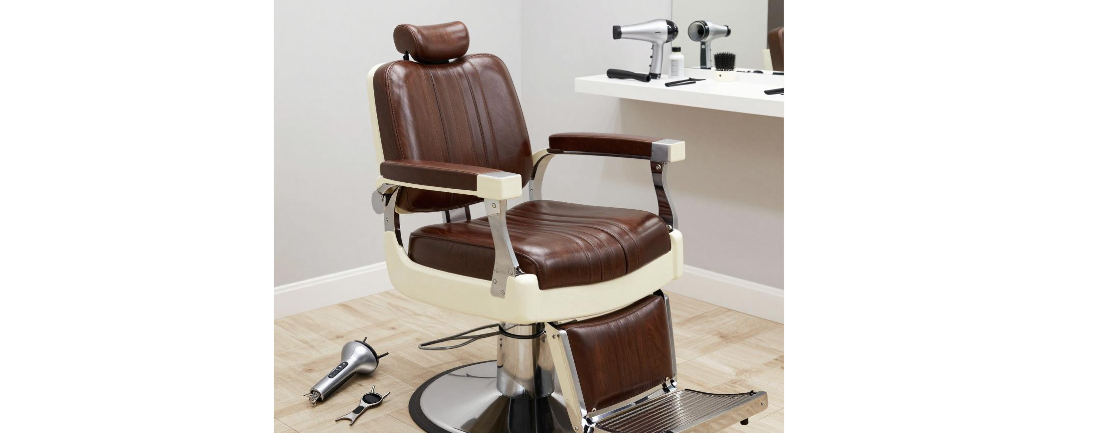
Most modern Barber Chairs use a foot operated hydraulic pump to raise, lower and swivel the seat. Pressing the foot pedal engages a small piston that forces hydraulic oil into a larger cylinder, and this fluid pressure creates the mechanical advantage needed to lift the seat, along with a seated client, with very little physical effort from the barber. Releasing a separate lever allows the oil to flow back and the seat to lower smoothly, while the base typically supports a full 360 degree swivel so the barber can work around the client without repositioning their own feet.
Barber Chair Versus a Regular Salon Chair
A hydraulic barber chair is generally heavier duty than a basic styling or salon chair, because it needs to support repeated height changes throughout a single service and hold that position steadily during detailed work such as fading or shaving. A standard salon chair may only offer a fixed or manually adjustable height without hydraulic assistance, which is fine for lighter styling work but less practical for a barbershop running back to back appointments through the day.
Checking the Base, Footrest and Frame Construction
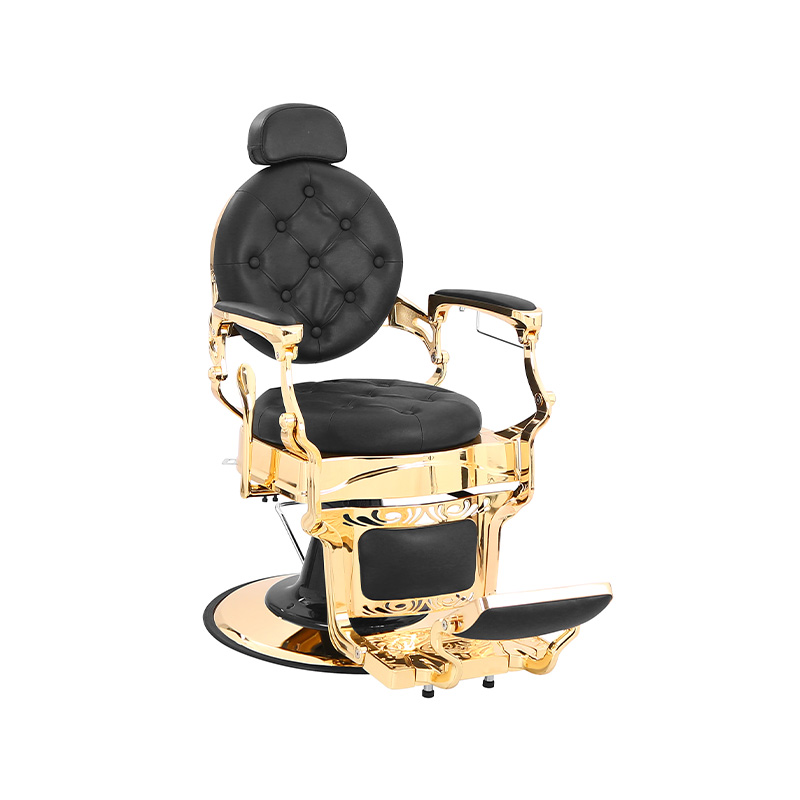
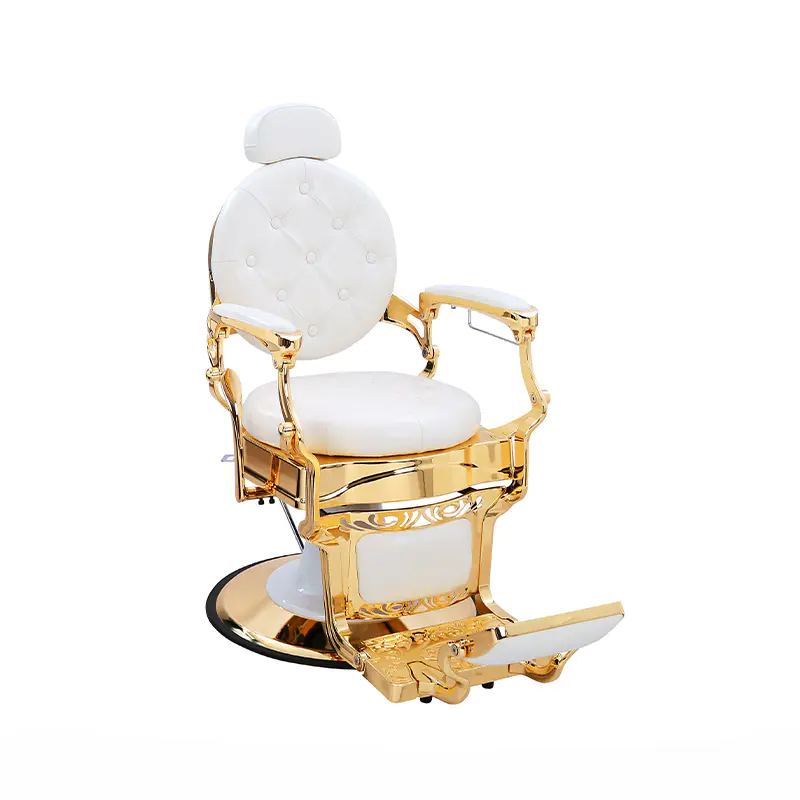
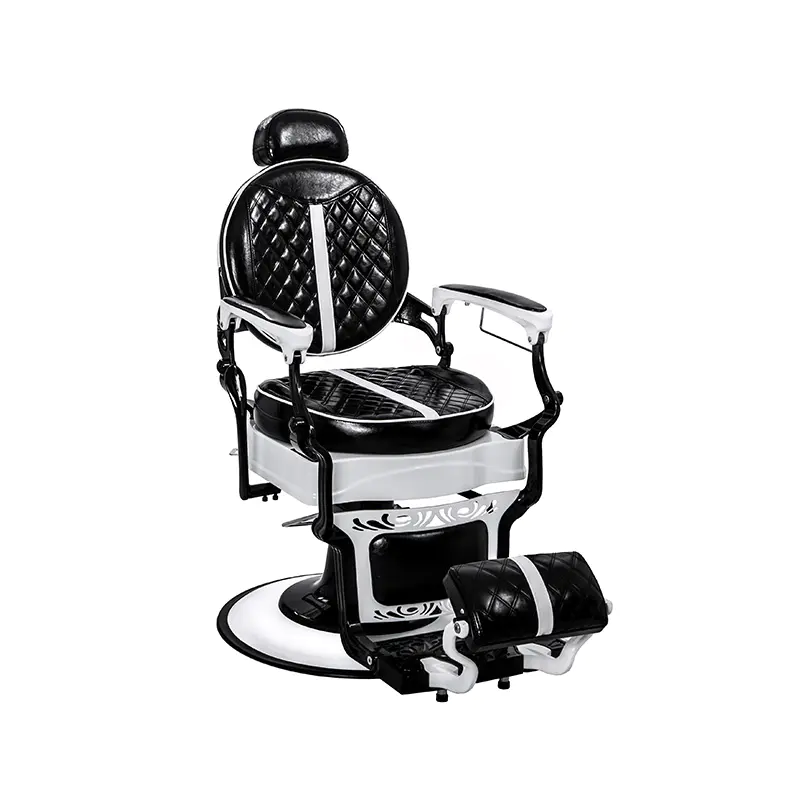
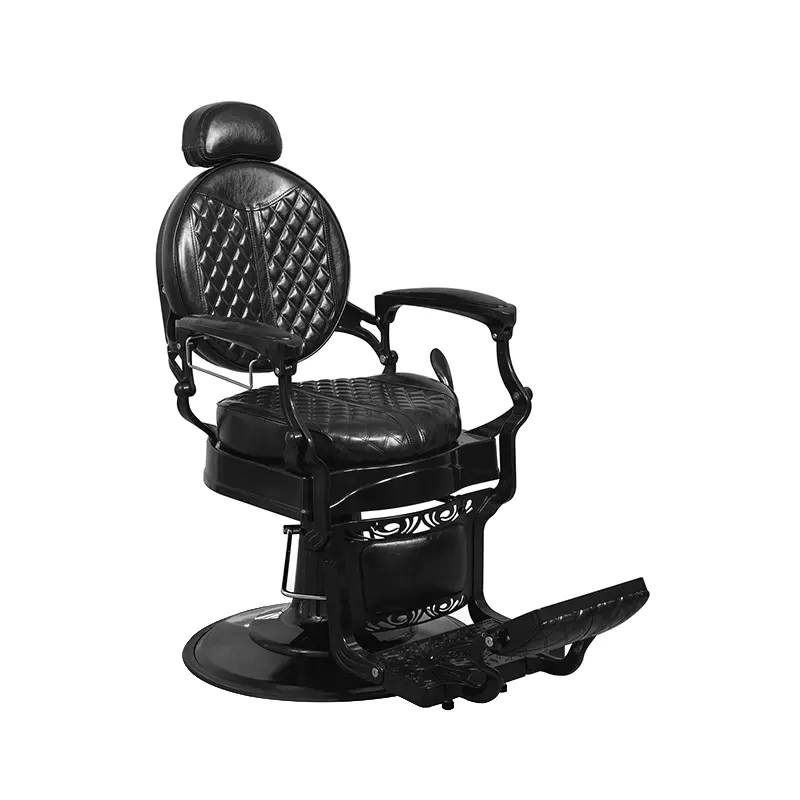
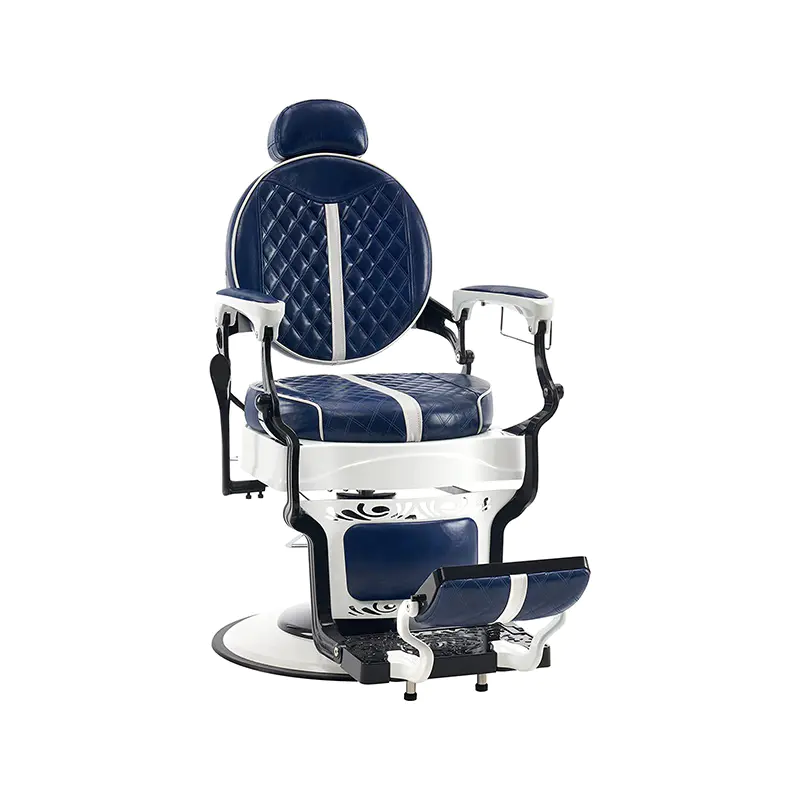
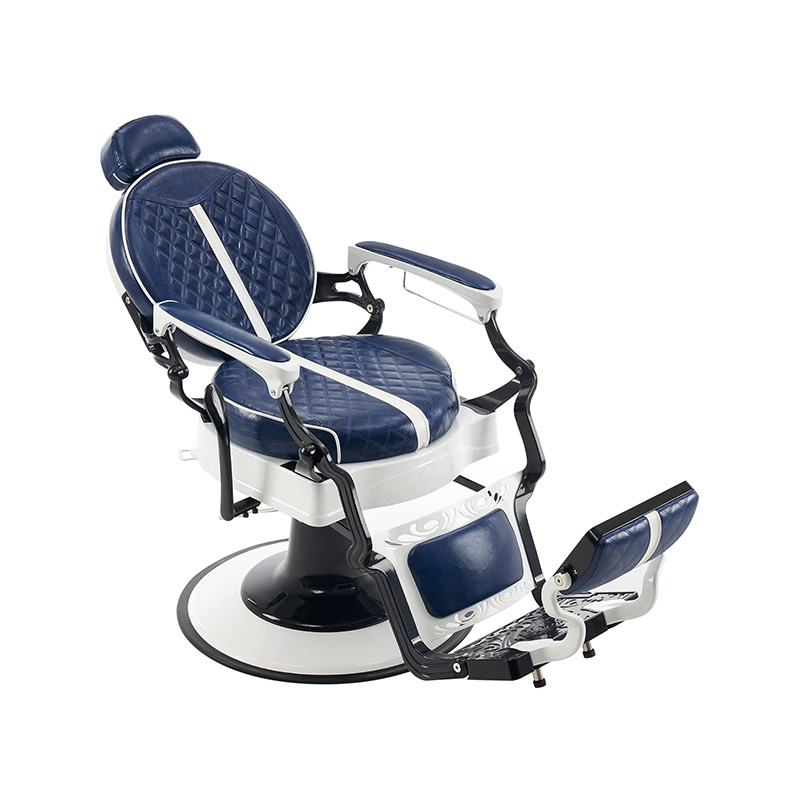
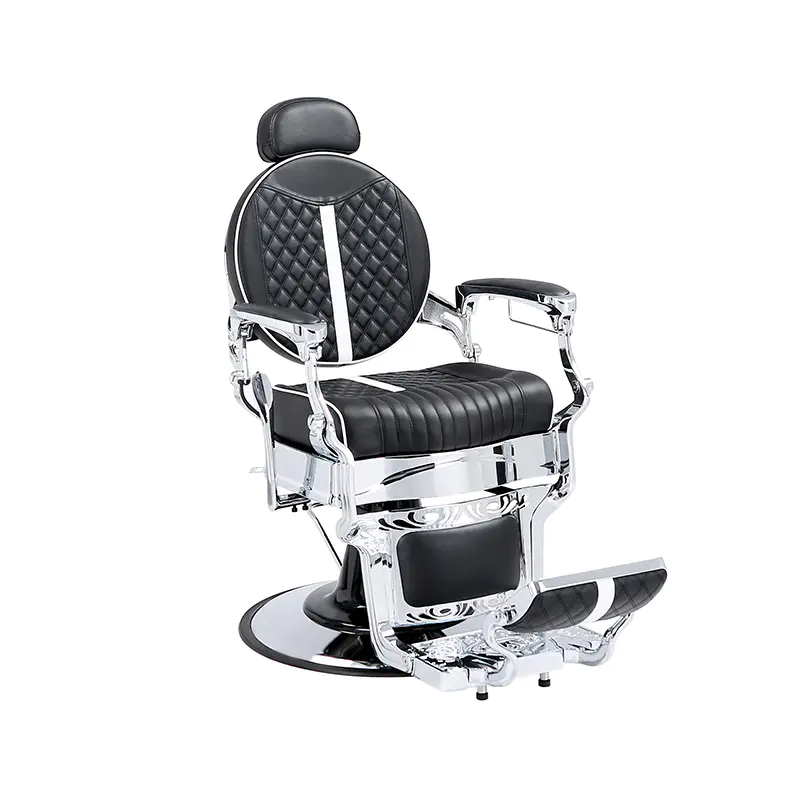
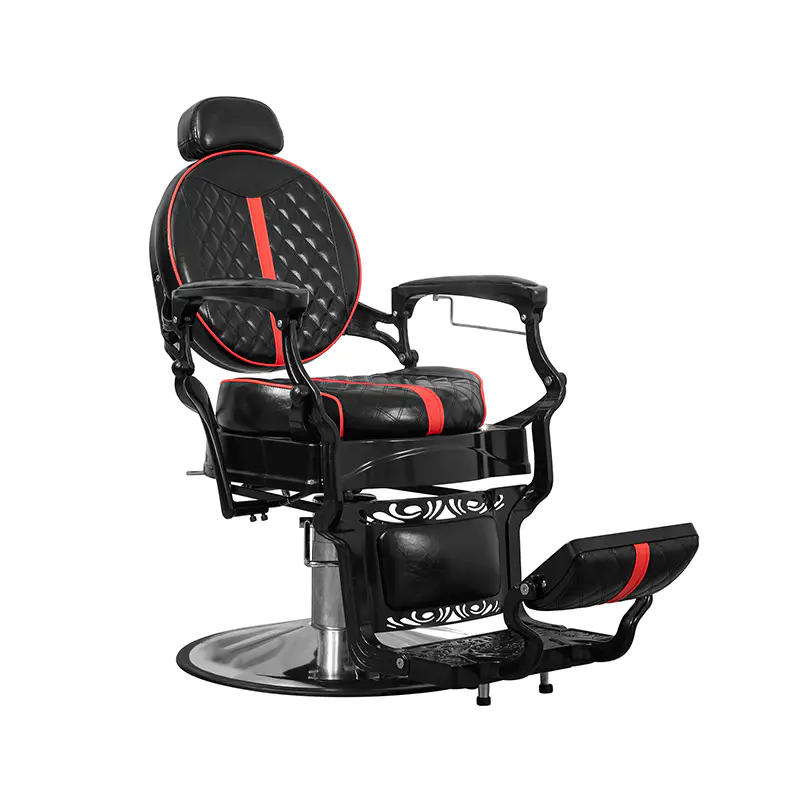
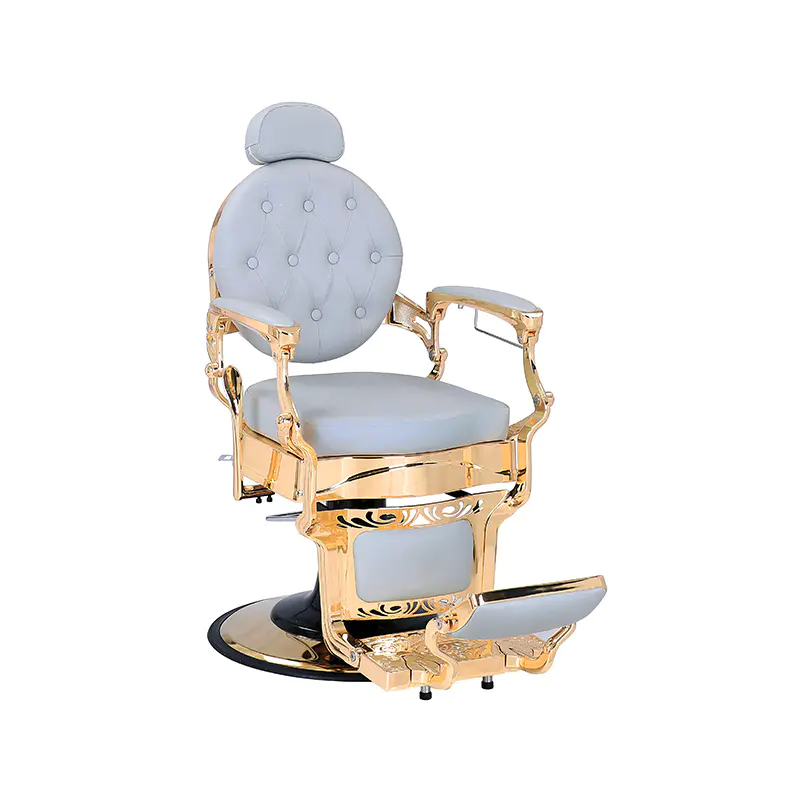
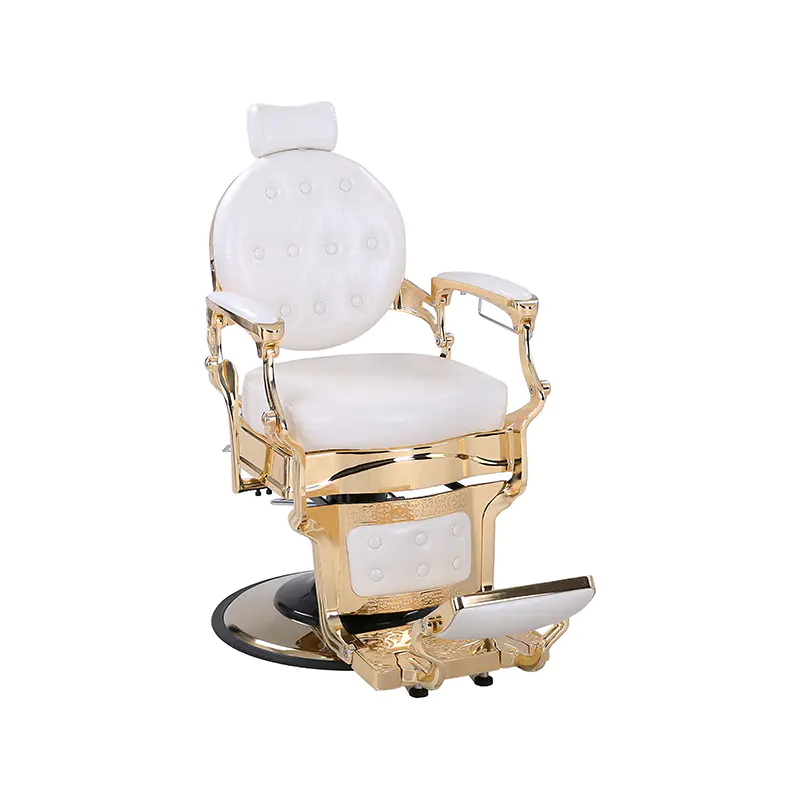
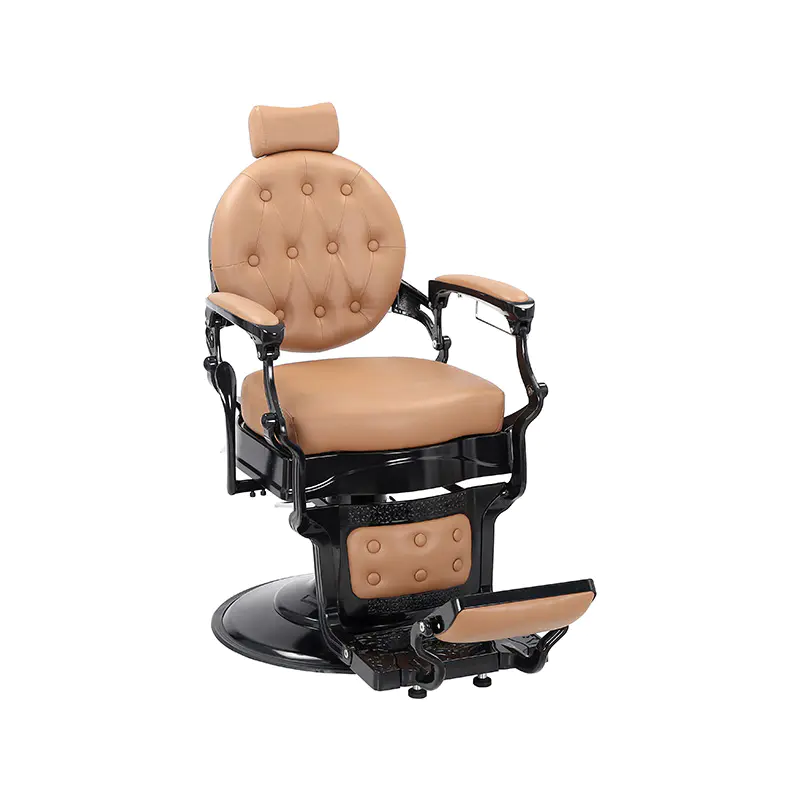
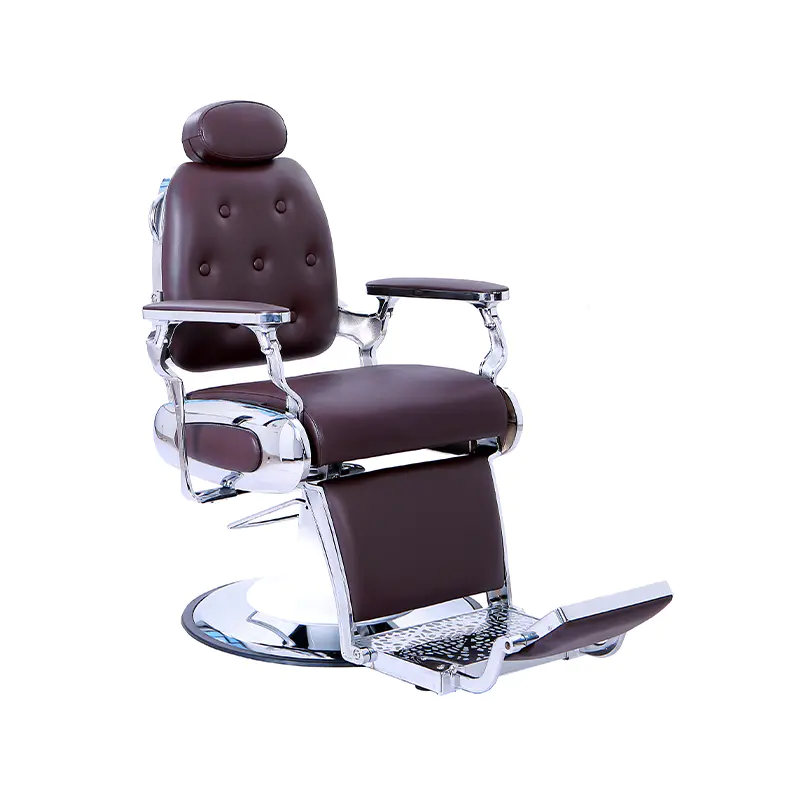
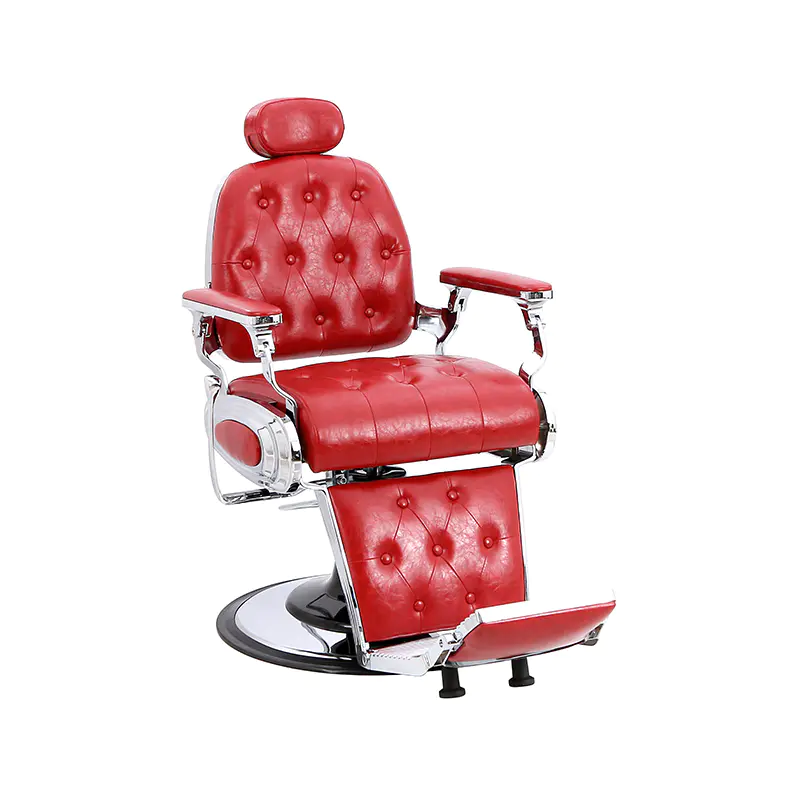
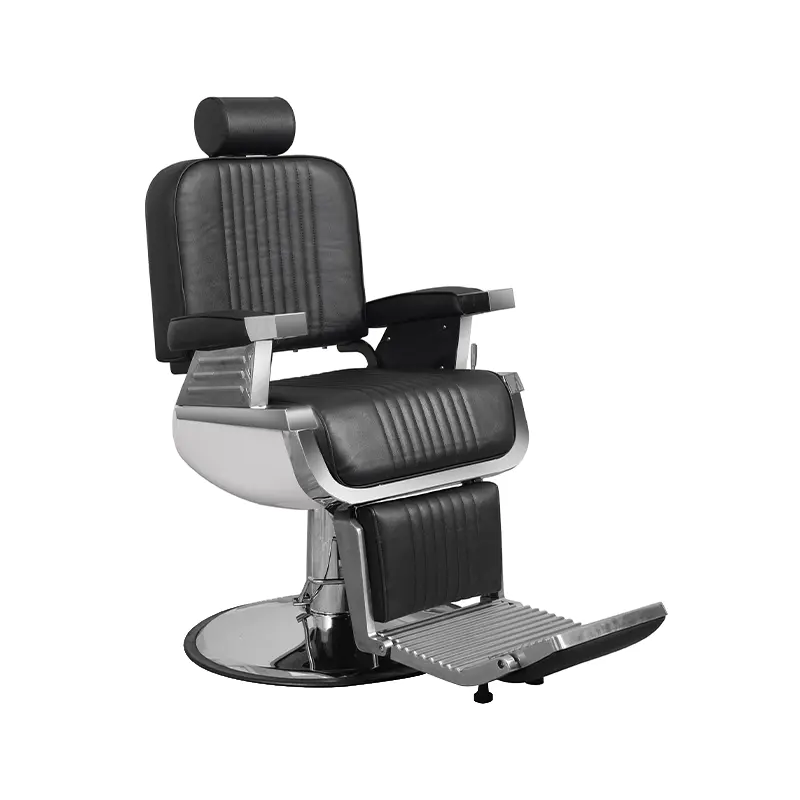
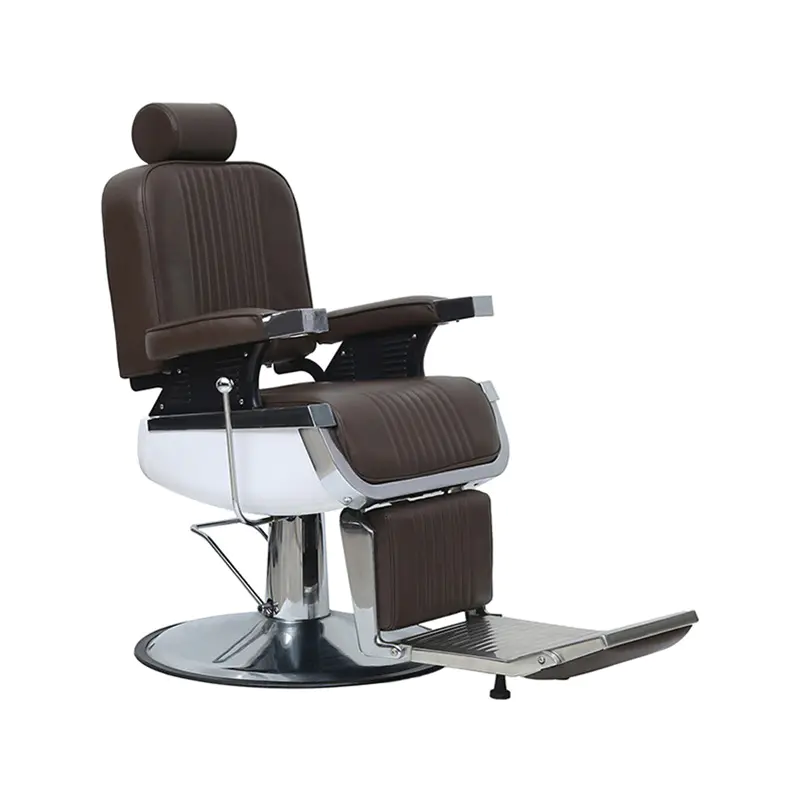
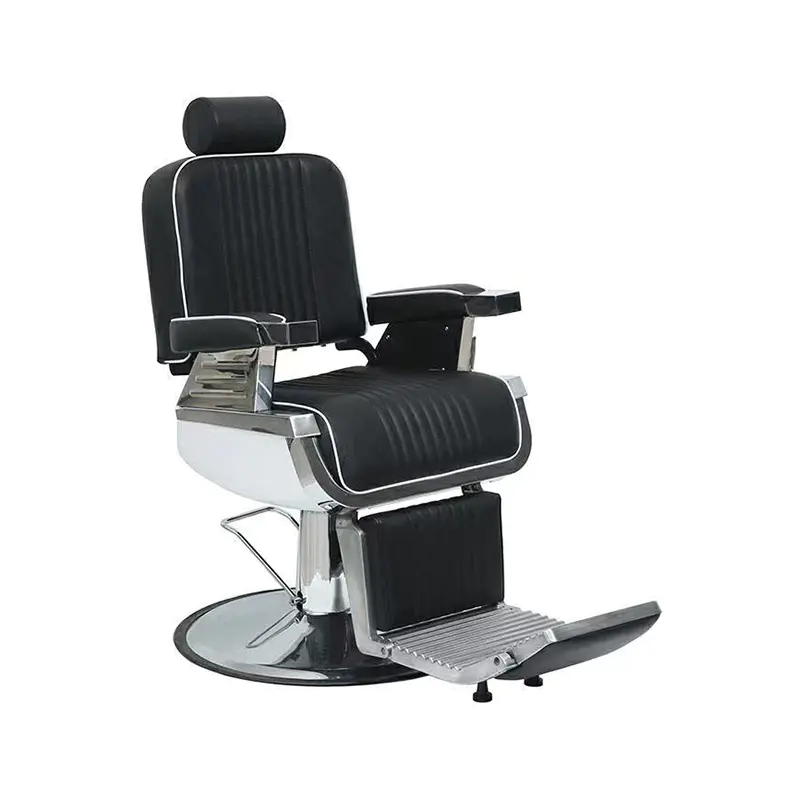
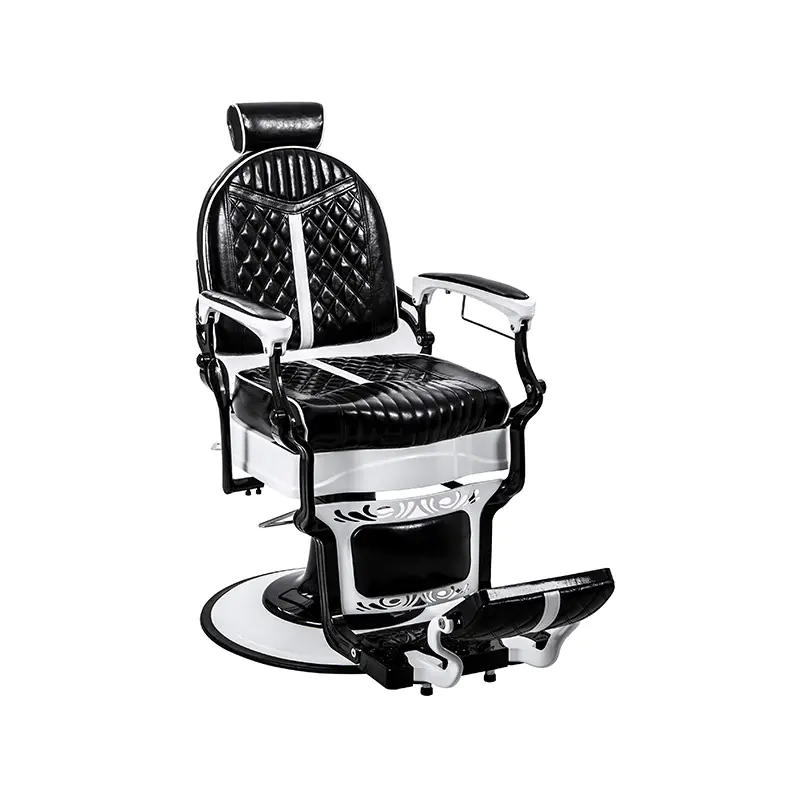
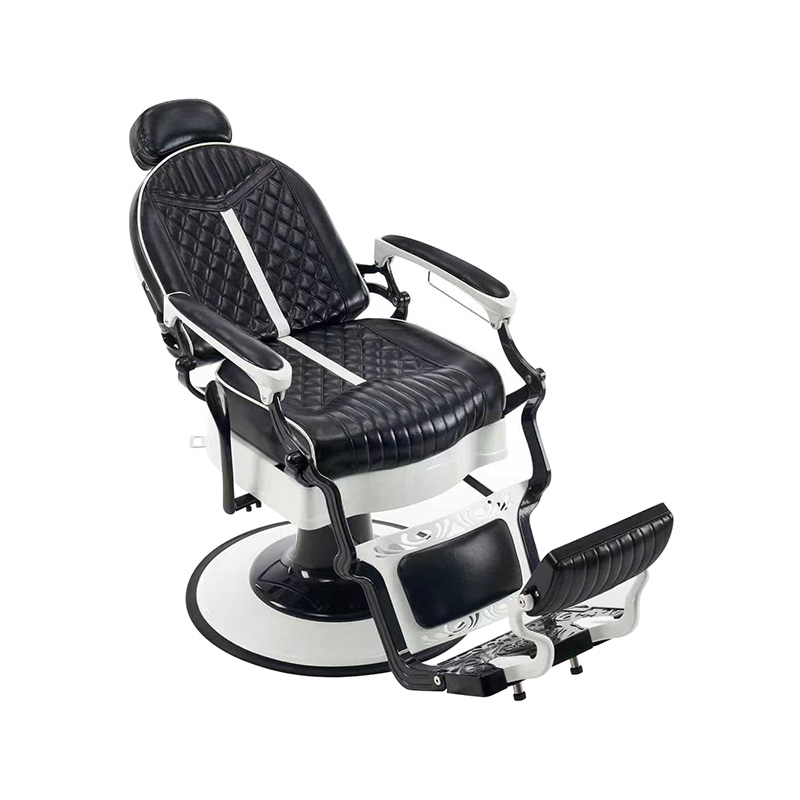
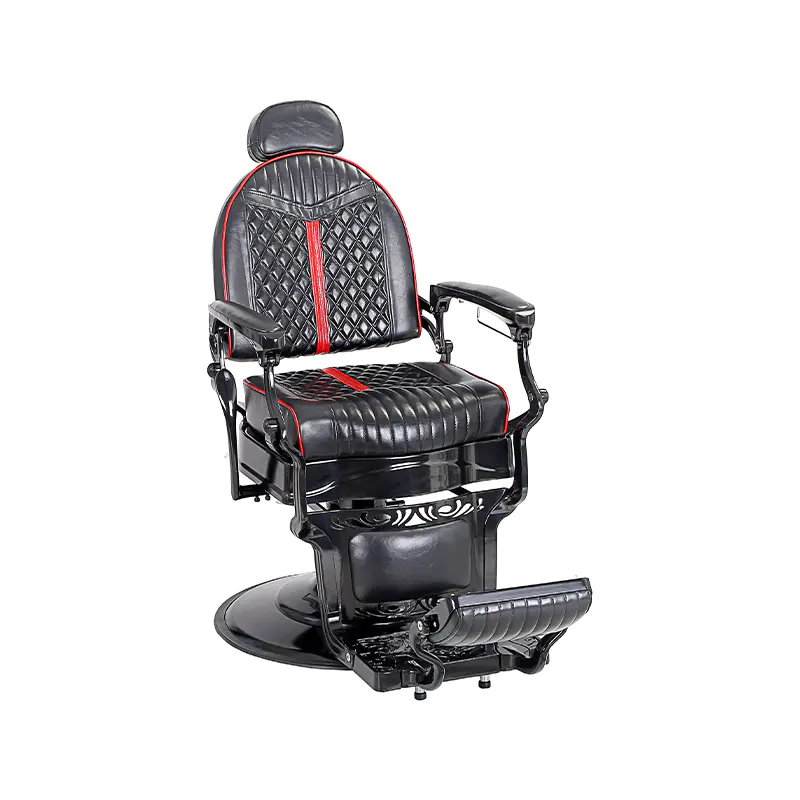
The visible upholstery is what a client notices first, but the base, footrest ring and internal frame are what determine whether the chair still feels solid after a few years of daily use. A wide, weighted base resists wobble during precise work, and a footrest ring that is welded rather than simply bolted on tends to hold its shape better under repeated foot pressure. The diagram below labels the main components worth examining before placing an order.
What to Physically Inspect Before Ordering
Ask whether the footrest ring is welded to the base column or attached with fasteners, since a welded ring tends to stay tight far longer under repeated foot pressure. Check whether the base is a single wide pedestal or a multi leg design, look at the finish on the base and pump housing for consistent chrome or matte plating, and confirm that non slip pads or a stable footing are included so the chair does not shift on tile or hardwood flooring.
Evaluating Hydraulic Pump Quality and Rated Capacity
The hydraulic pump is the single component most responsible for how a barber chair performs over its lifetime, since it handles every height adjustment for every client throughout the working day. Economy pumps are generally simpler and lighter, which keeps installation easy, but they tend to have a shorter service life under heavy daily use and can become prone to overheating or fluid leakage if pushed hard. Heavier duty commercial pumps use more robust seals and cylinder construction, offering smoother operation, better pressure distribution across the full lift range, and a meaningfully longer working life.
Questions Worth Asking a Barber Chair Manufacturer
Ask what the pump's rated static and working load actually is, since a chair rated for occasional light use behaves very differently from one built for continuous commercial cycles. Ask about the seal material used inside the cylinder, since better seals resist the chemical exposure common in a salon environment, such as cleaning agents and hair products, and this directly affects how long the pump holds pressure without gradually sinking.
Matching Weight Capacity to Commercial Use
Rated weight capacity is one of the clearest indicators of build quality across Barber Chairs. Entry level chairs intended for lighter or occasional use commonly sit in the range of roughly 220 to 300 pounds, which is generally adequate for average clients but leaves little margin for larger clients or heavy daily cycling. Chairs built for busy commercial shops are typically rated higher, and heavy duty hydraulic pumps can support figures in the range of 400 to 500 pounds, which gives a more comfortable safety margin across a full working day.
Weight Capacity Reference
| Pump Grade | Typical Capacity | Best Suited For |
|---|---|---|
| Entry-Level | 220 to 300 lbs | Home studios, occasional use |
| Standard Commercial | 300 to 350 lbs | General barbershop daily use |
| Heavy-Duty | 400 to 500 lbs | High traffic, multi-chair shops |
How Long Do Barber Chairs Typically Last
Overall chair lifespan tracks closely with pump grade and how consistently the chair is maintained. With reasonable maintenance, a standard commercial hydraulic pump commonly serves somewhere in the range of five to eight years under daily use, while heavy duty units built with more robust seals and cylinders can exceed ten years of service, according to published barber chair sourcing guides. Economy pumps intended for light or occasional use generally fall well short of this, since the internal seals and piston components are simply not built for continuous commercial cycling.
Common Signs a Pump Needs Attention
- The seat gradually sinks on its own after being raised, which usually points to worn internal seals or low hydraulic fluid
- The pedal feels loose or the chair will not rise at all, which can indicate a fluid leak or a failed piston
- Visible fluid residue around the base is an early warning sign worth addressing before it worsens
Comparing Upholstery Materials for Barber Chairs
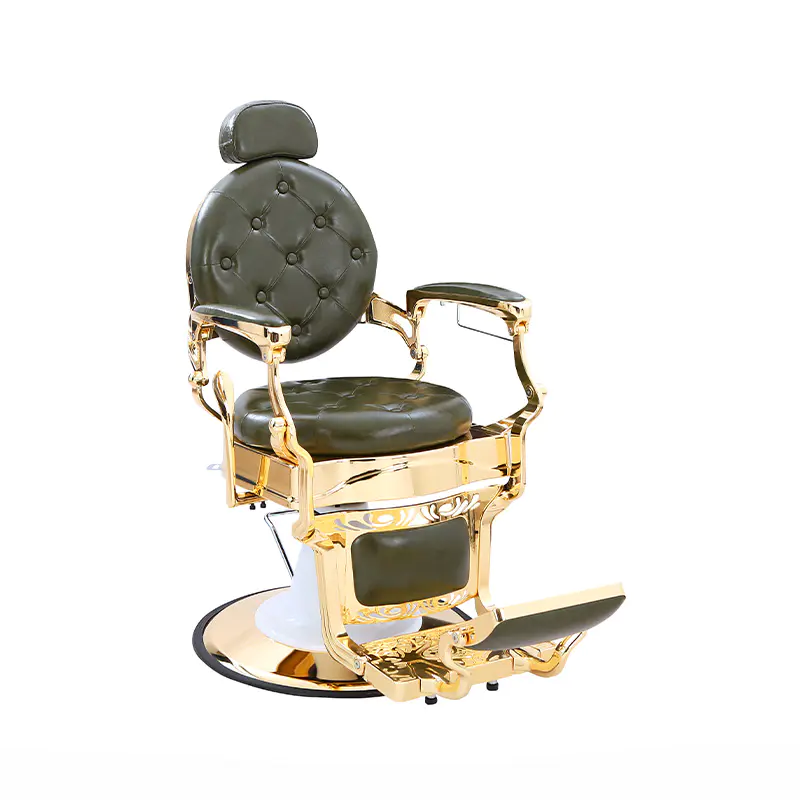
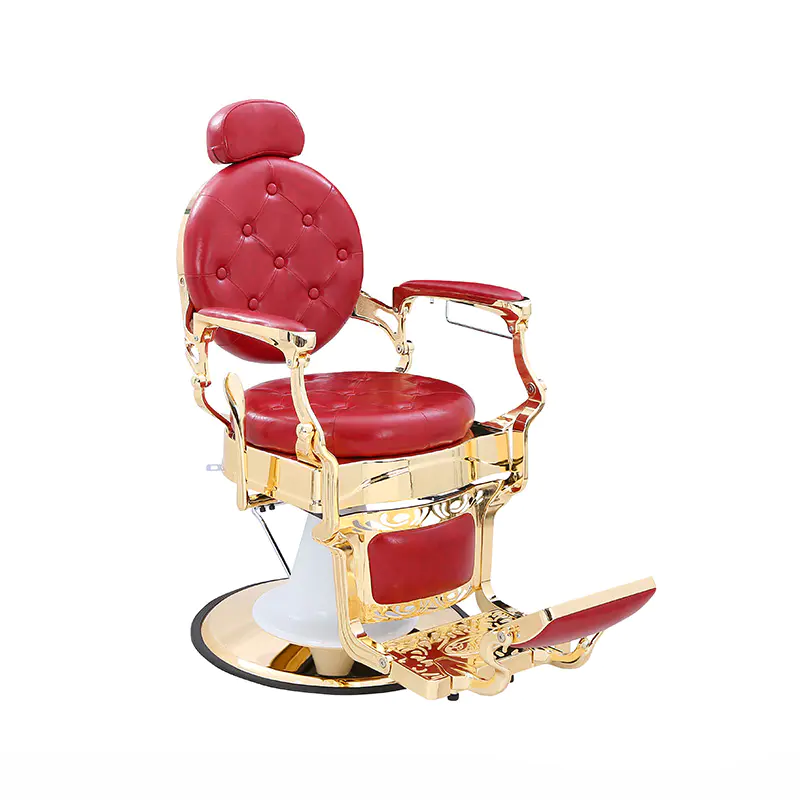
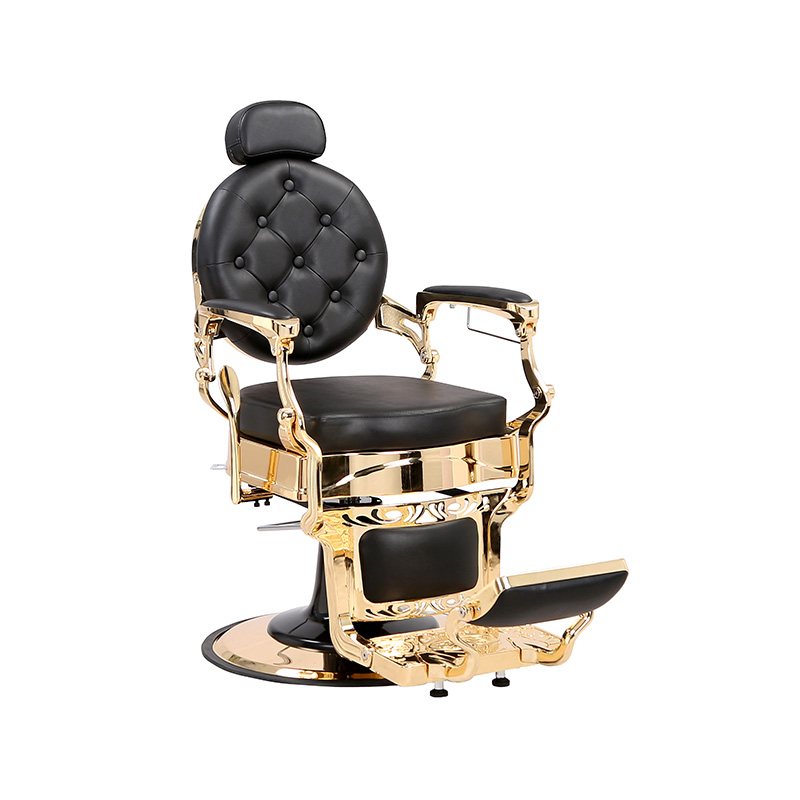
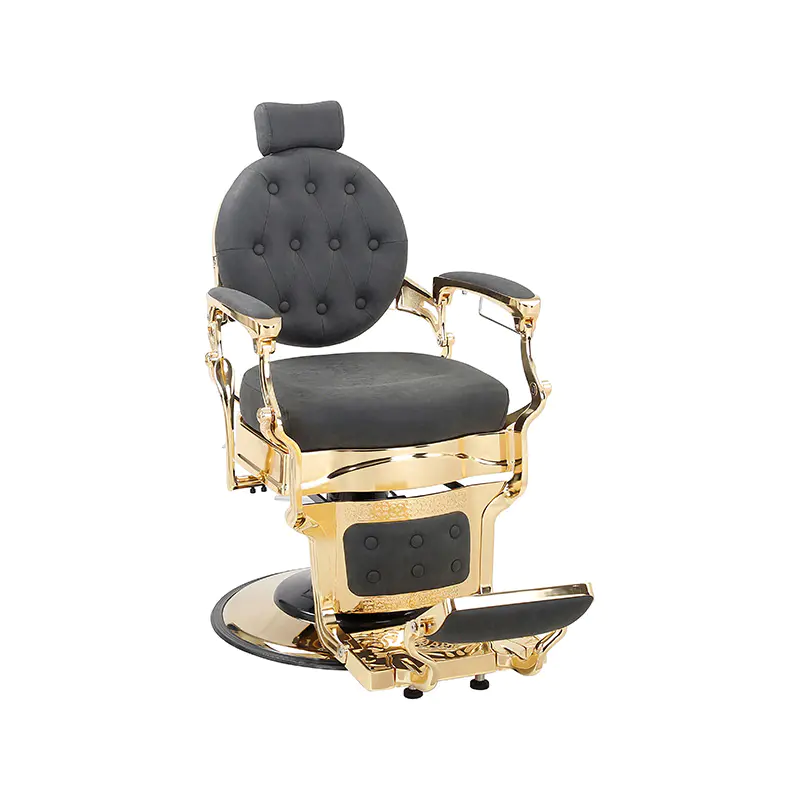
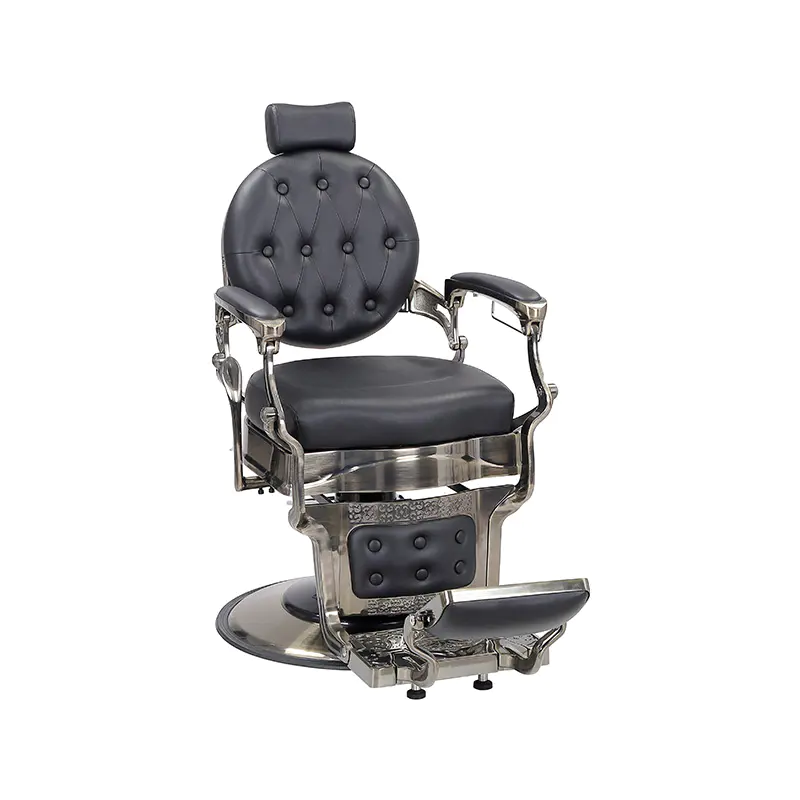
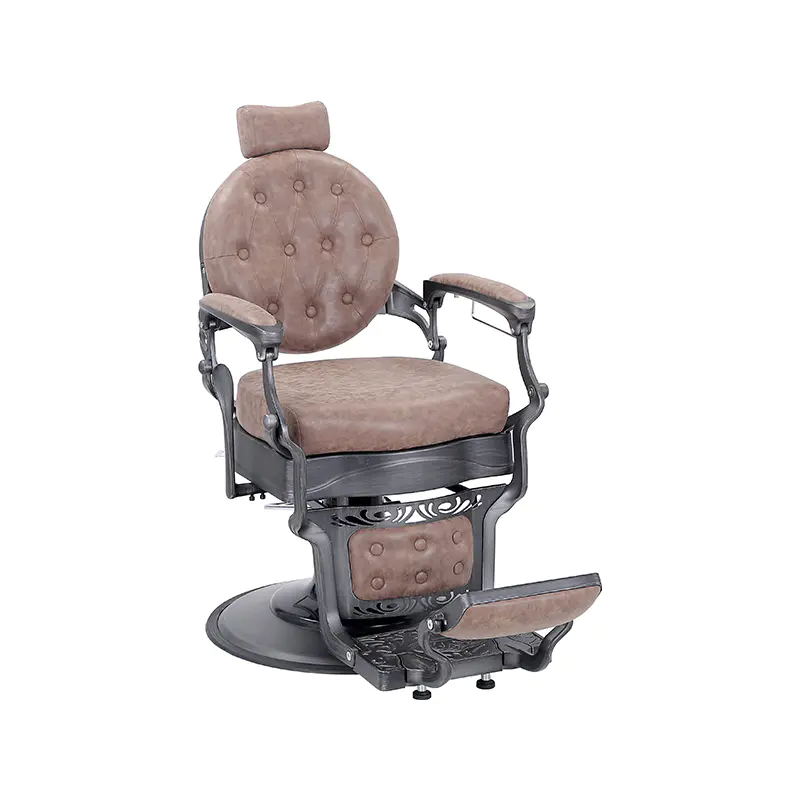
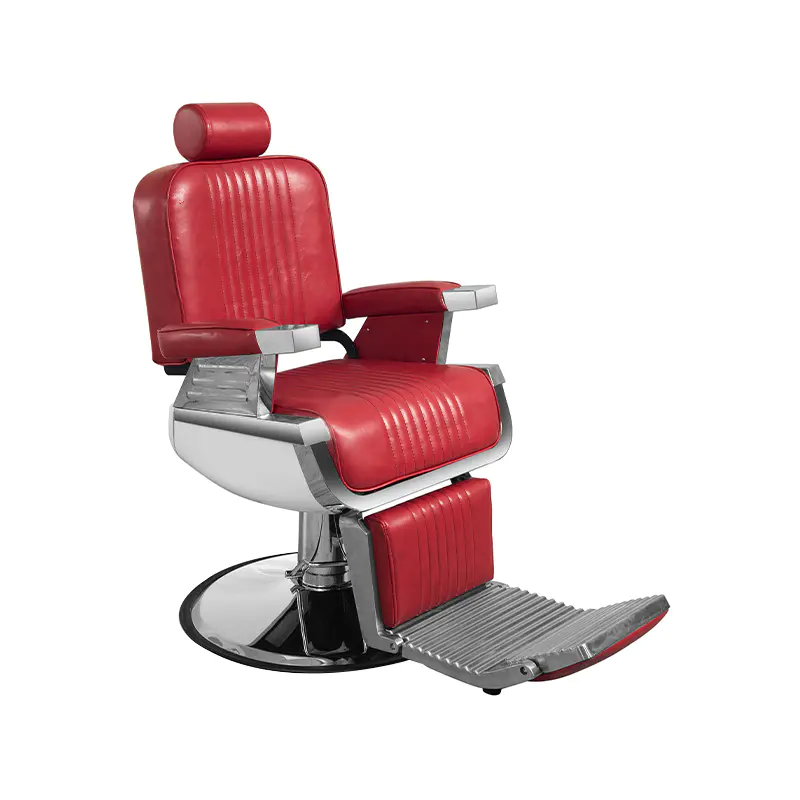
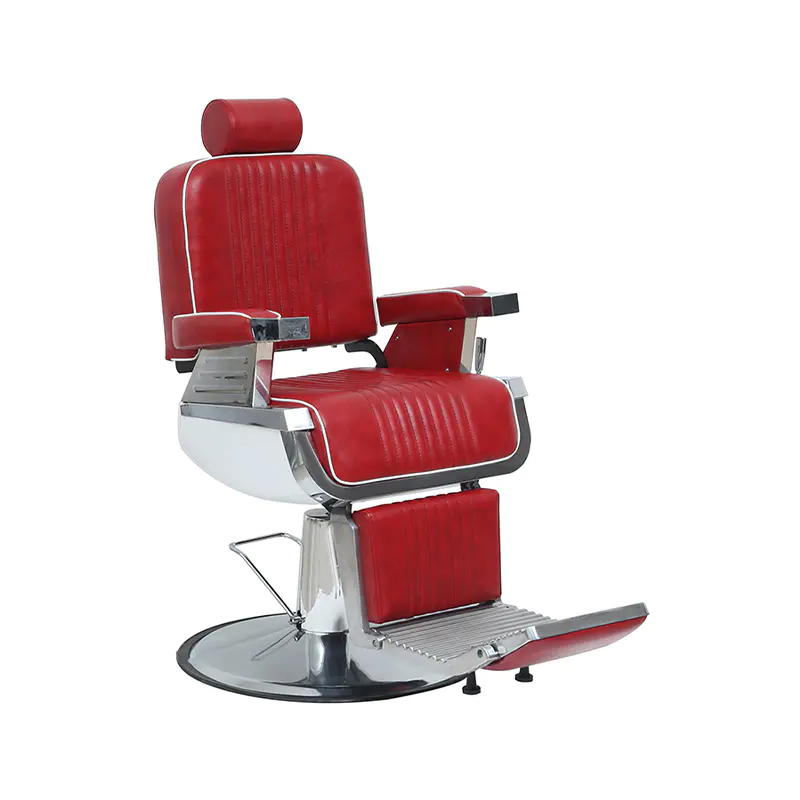
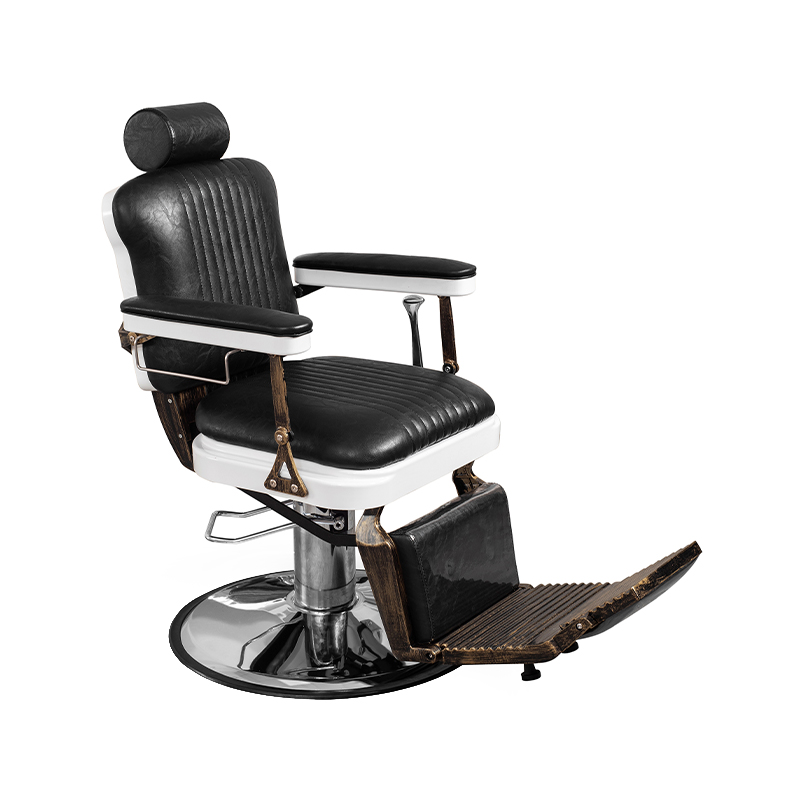
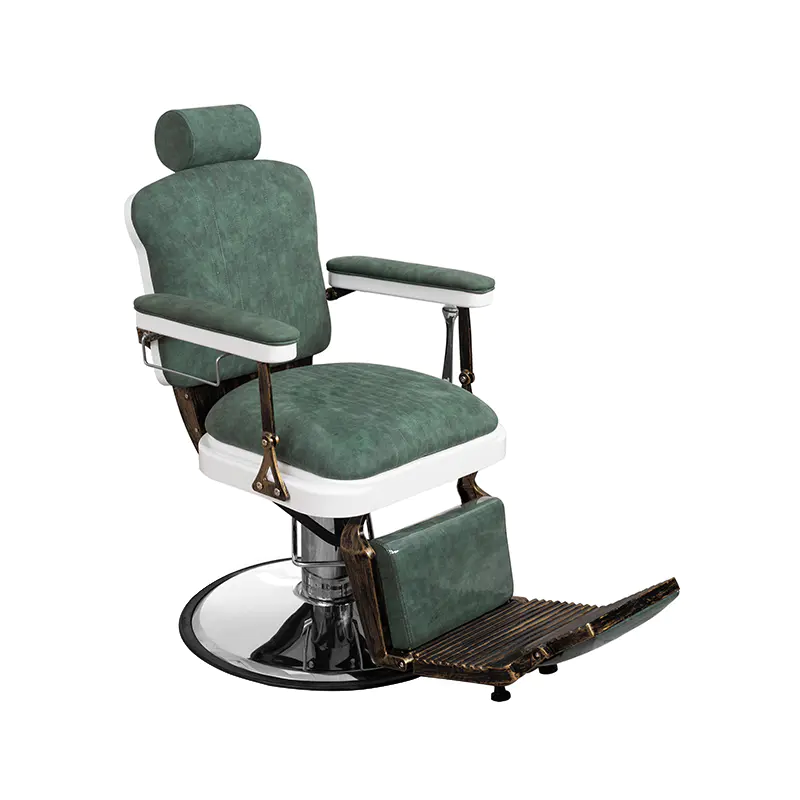
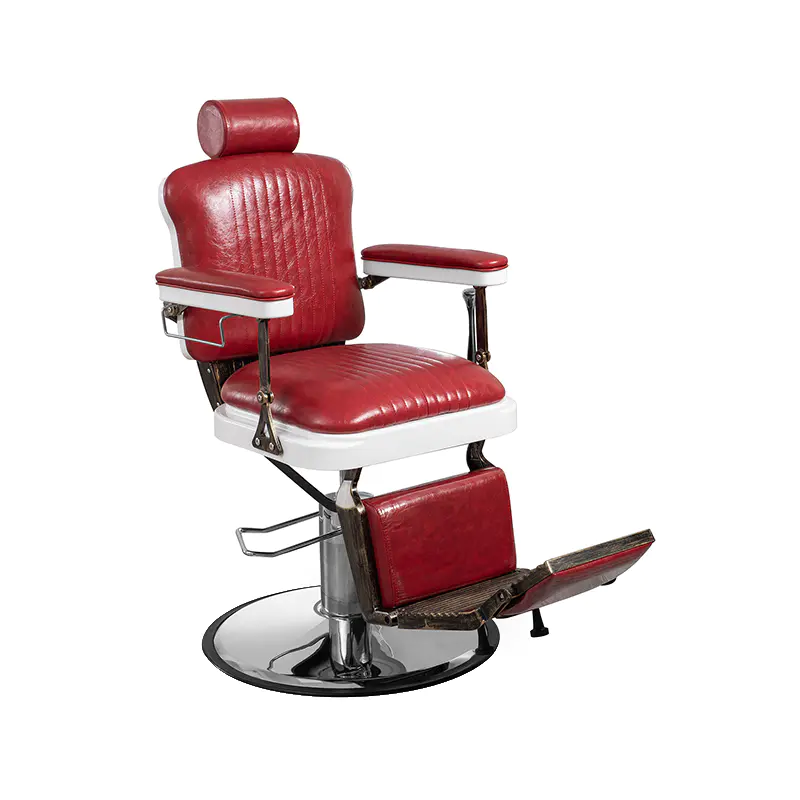
Upholstery choice affects cleaning routine, comfort and how the chair ages under daily contact with hair products, cleaning chemicals and constant sitting. PVC vinyl is widely used because it resists scratches, tears and stains while remaining fully wipeable, though it can feel less refined than leather. PU leather offers a more realistic leather look with good resistance to moisture and cleaning chemicals, and it wipes clean quickly between clients, though it generally does not match the long term durability of genuine leather. Genuine leather is naturally breathable and can last a long time when properly cared for, but it requires more attentive maintenance than either synthetic option.
Upholstery Comparison Table
| Material | Strength | Consideration |
|---|---|---|
| PVC Vinyl | Highly stain and scratch resistant | Less luxurious feel than leather |
| PU Leather | Realistic look, easy to wipe clean | Wears faster than genuine leather |
| Genuine Leather | Breathable, long lasting with care | Needs more attentive maintenance |
Recline Mechanism and Client Comfort Features
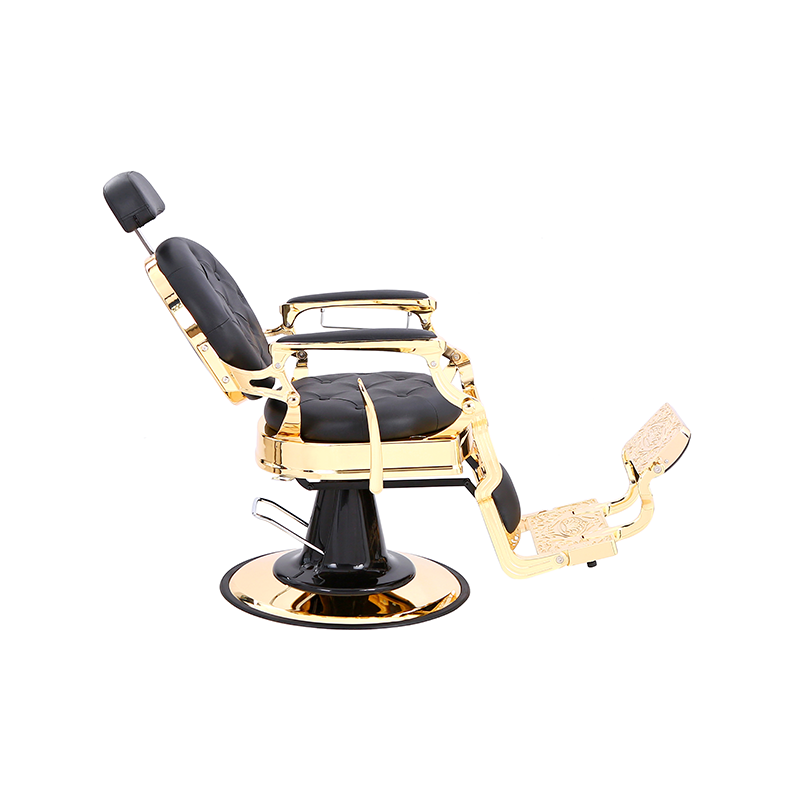
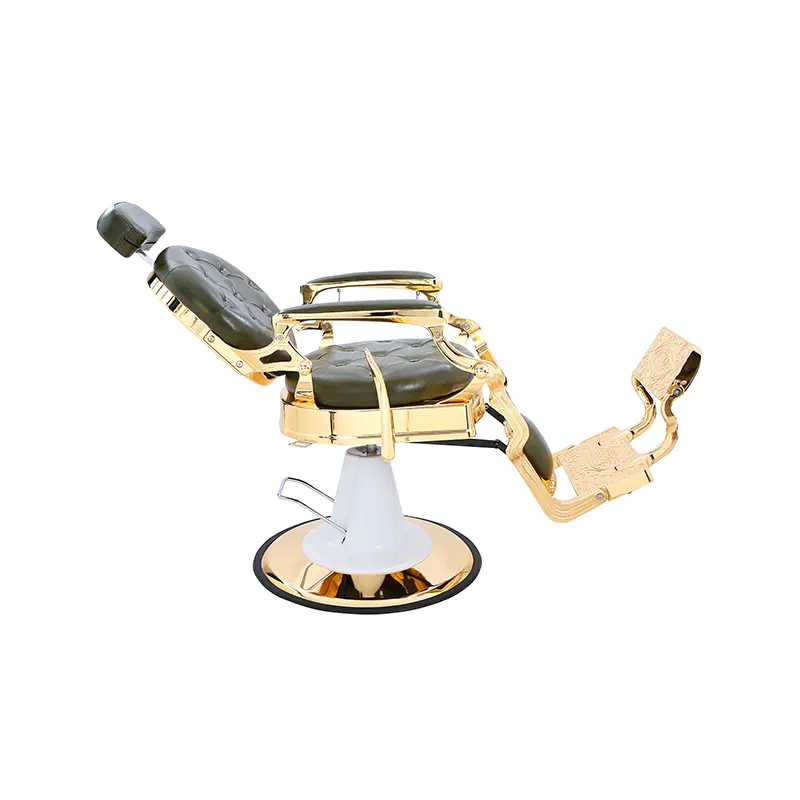
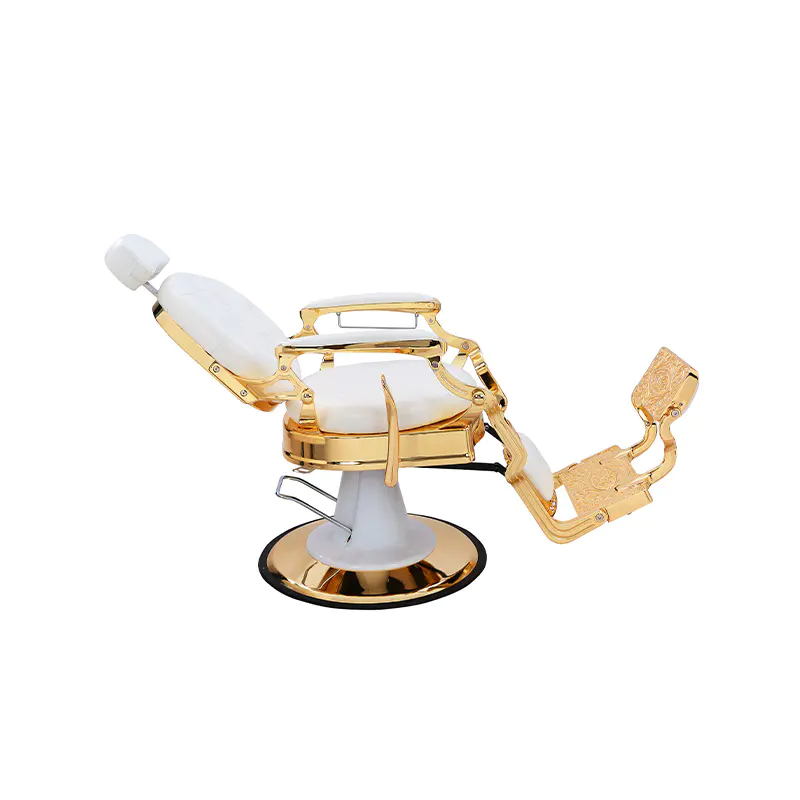
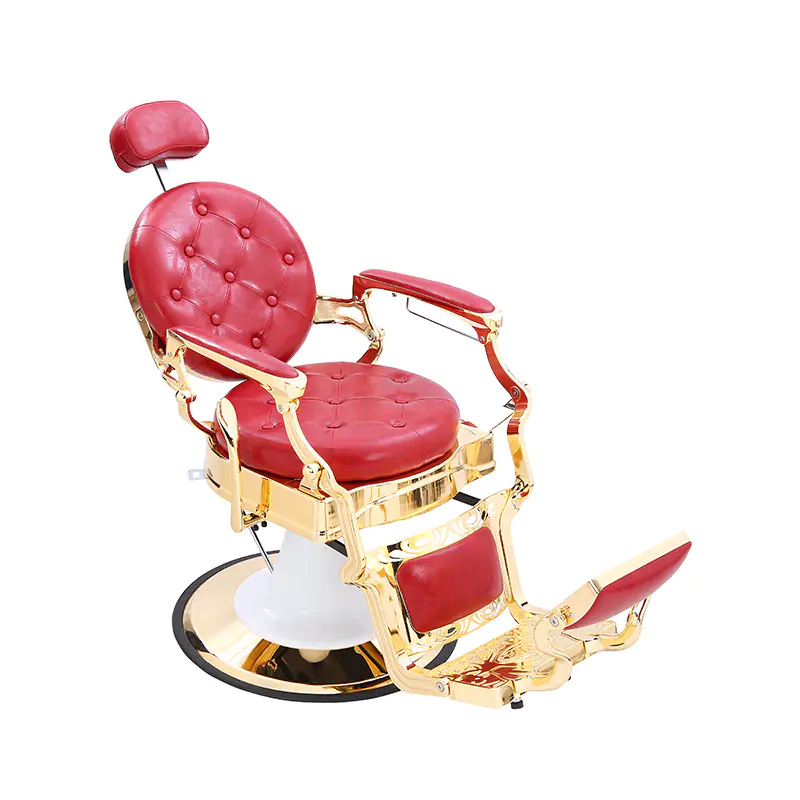
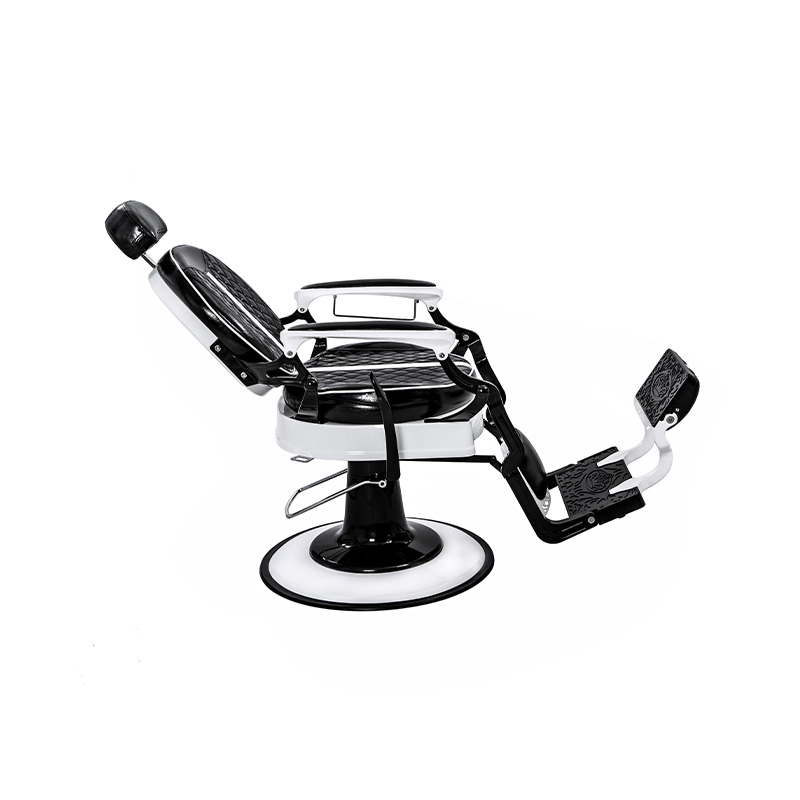
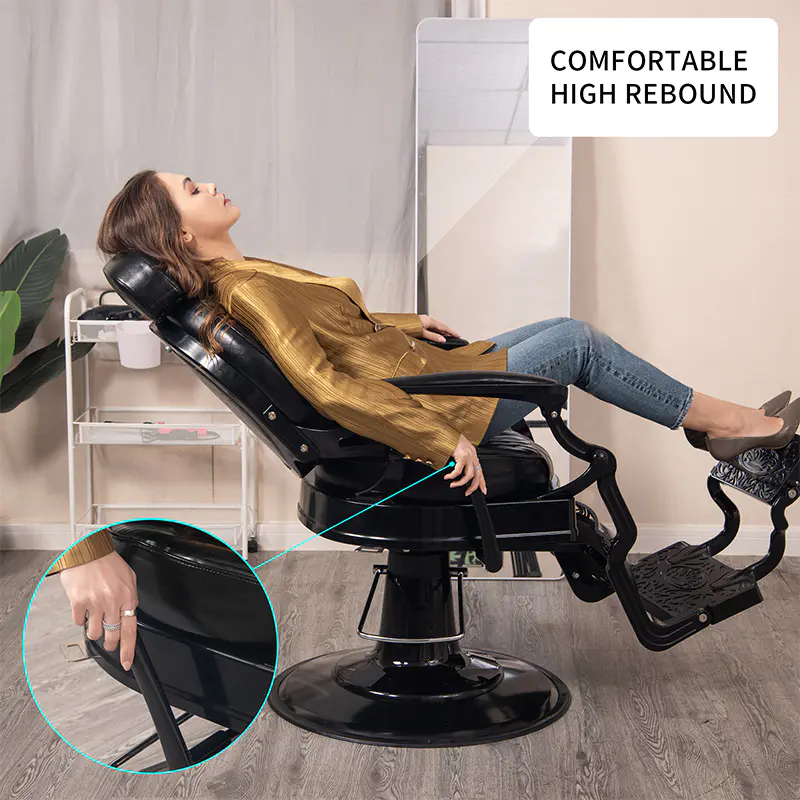
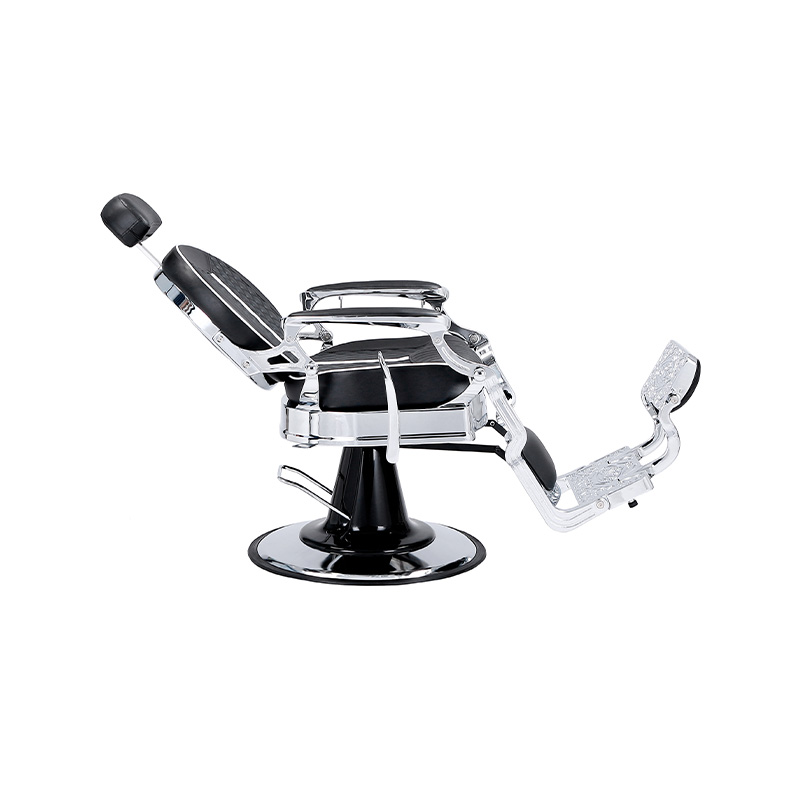
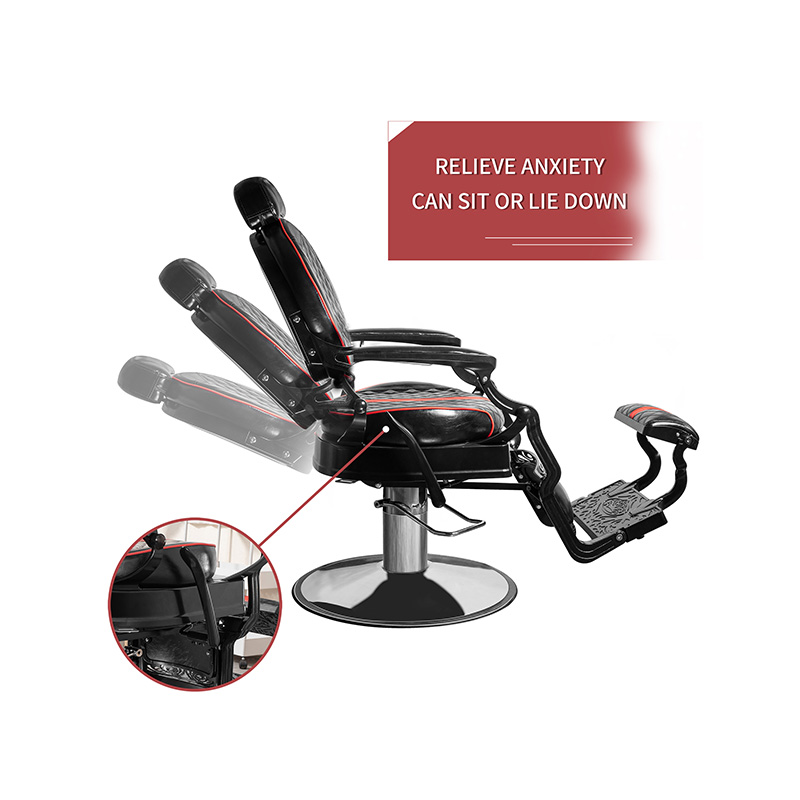
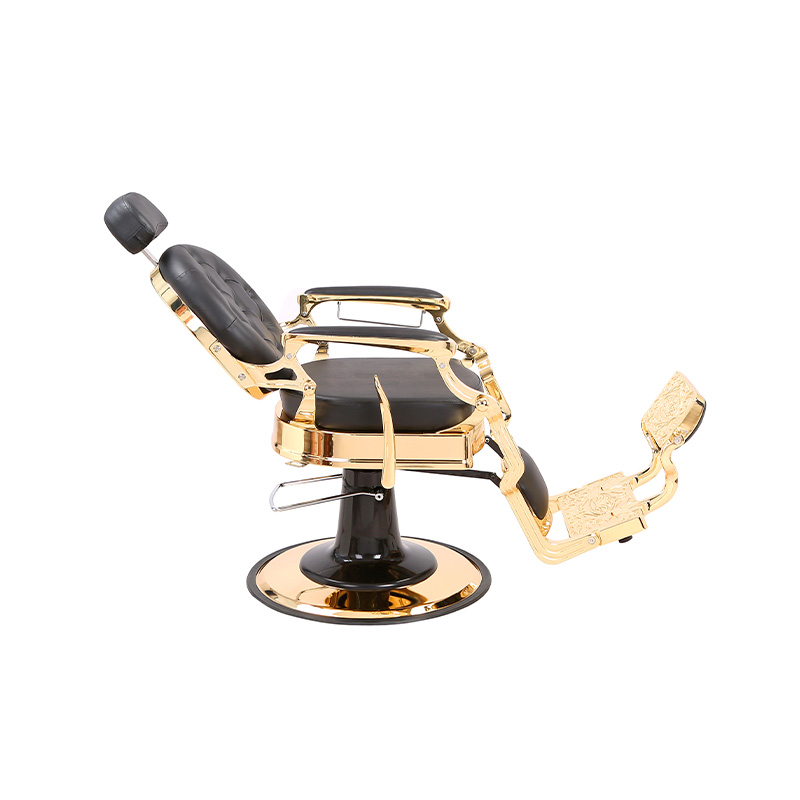
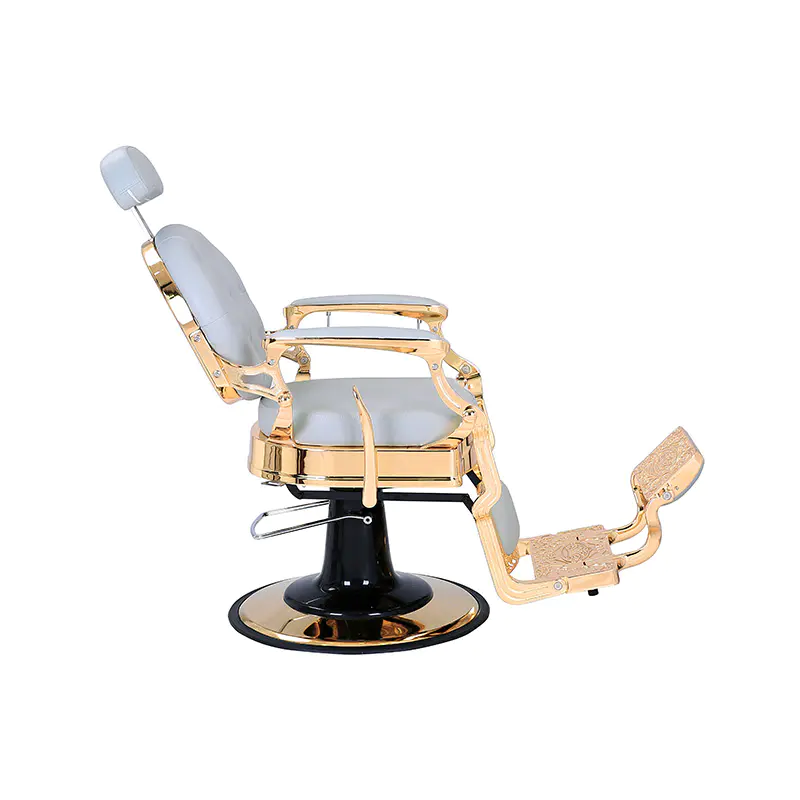
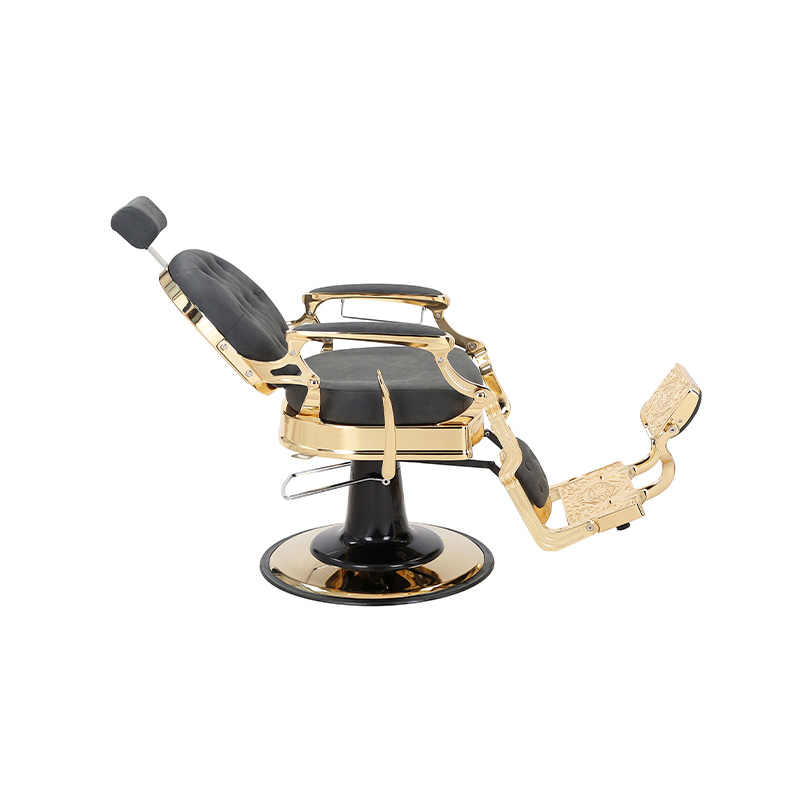
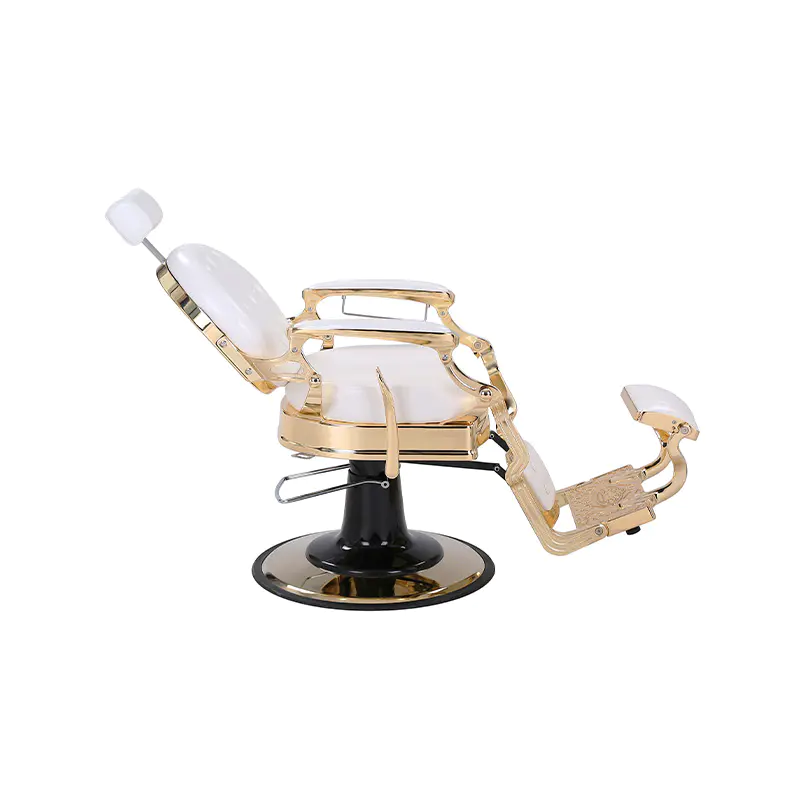
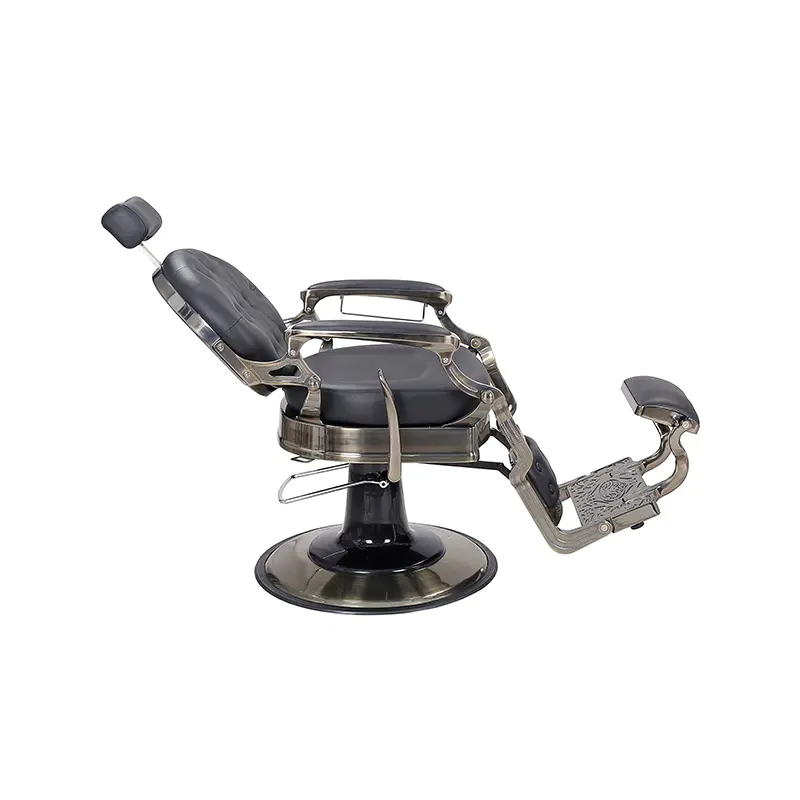
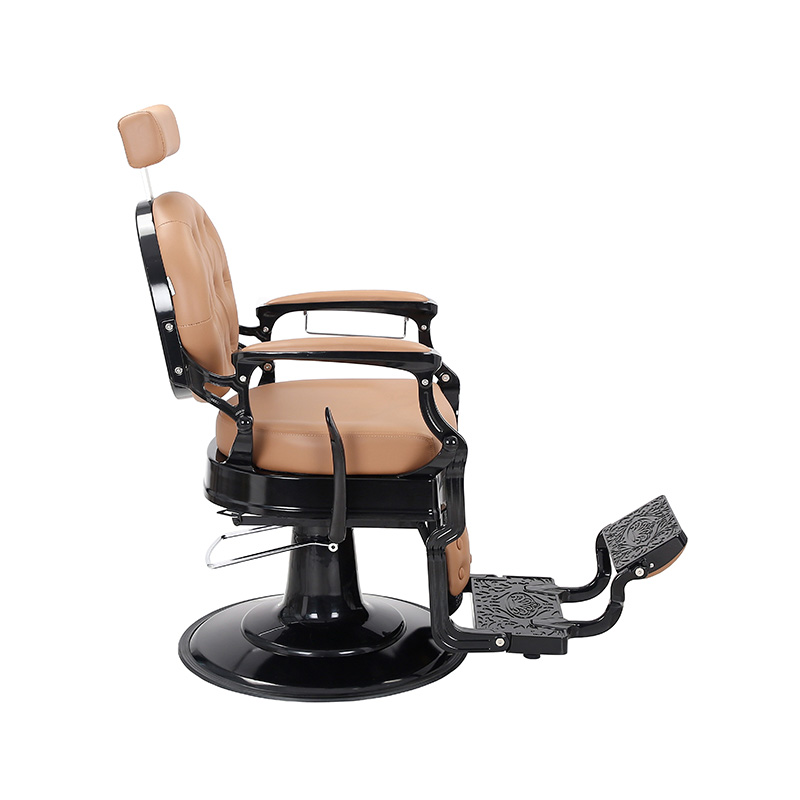
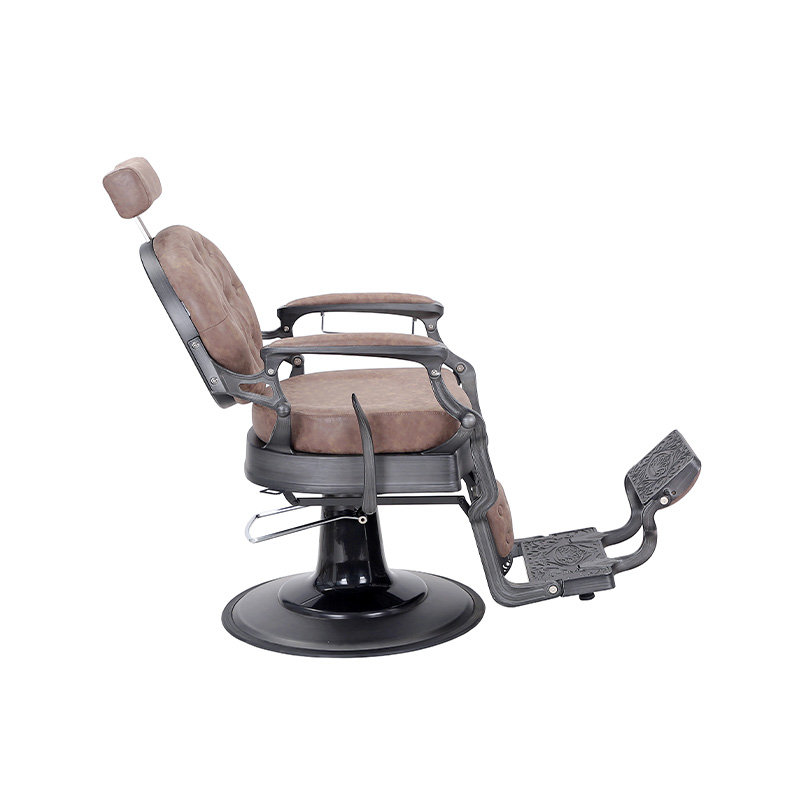
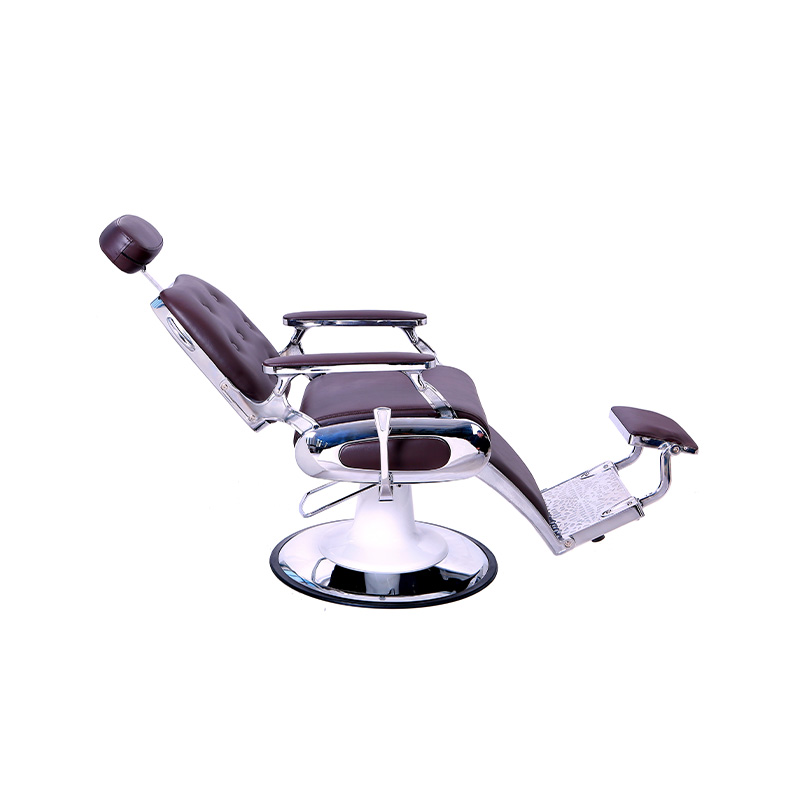
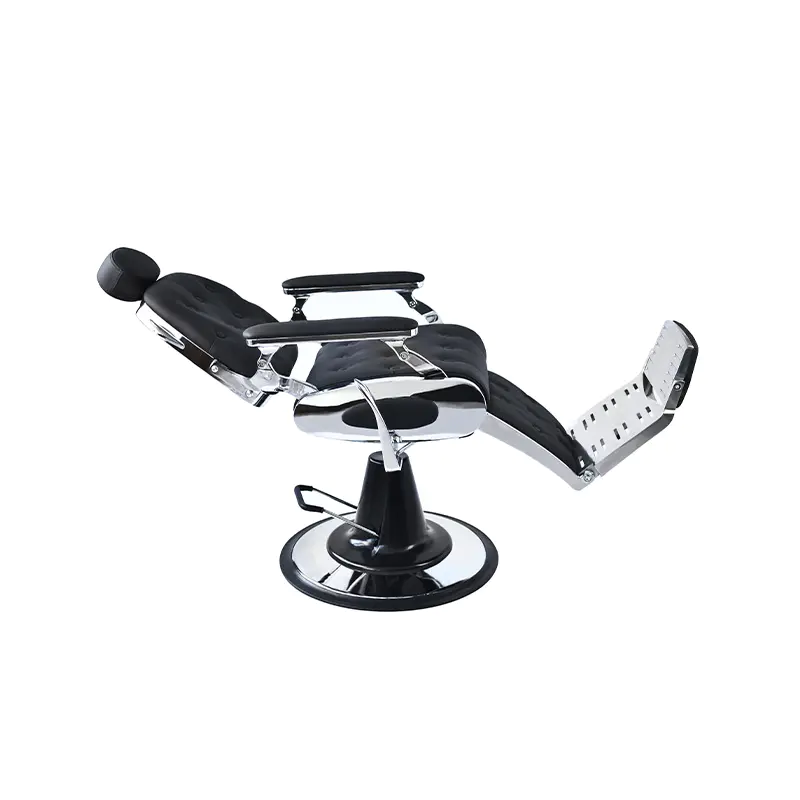
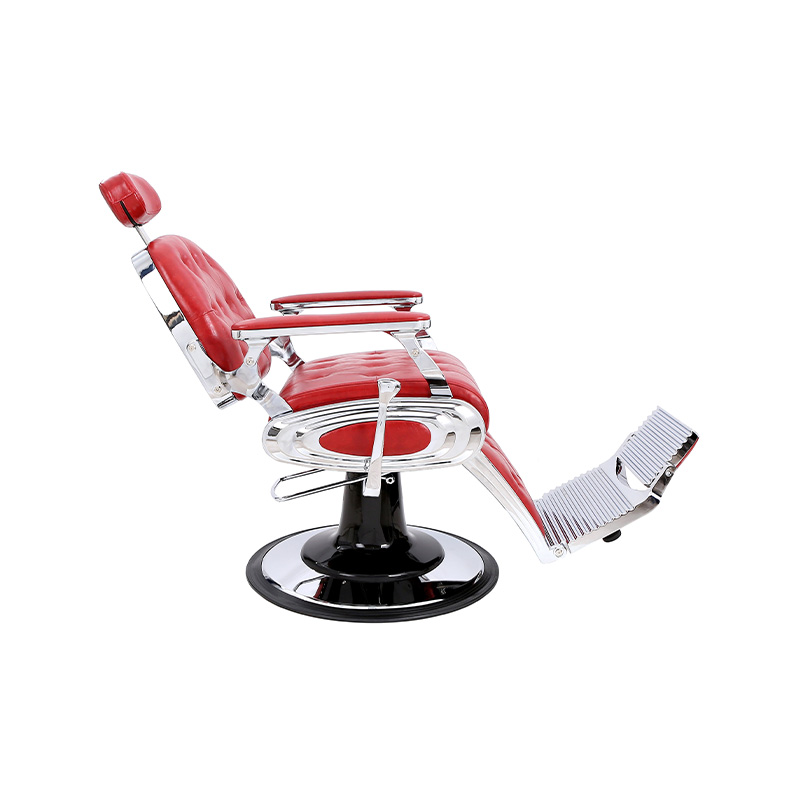
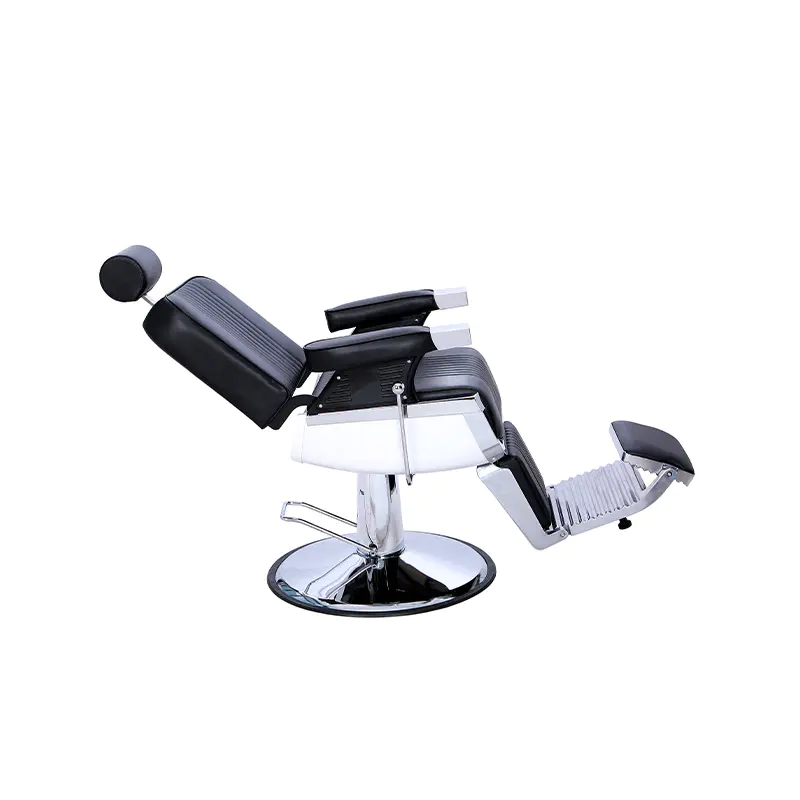
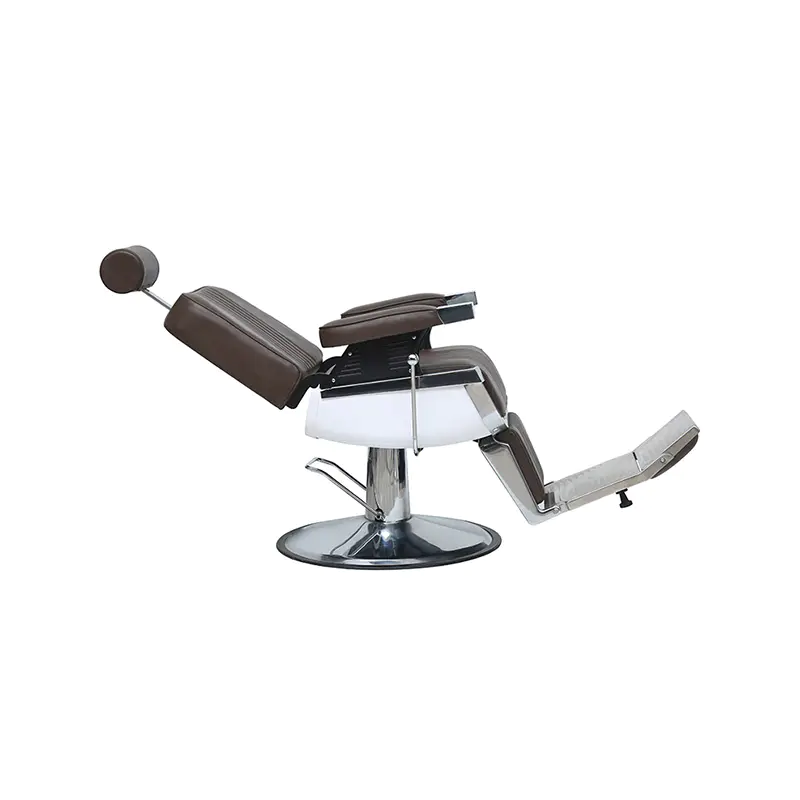
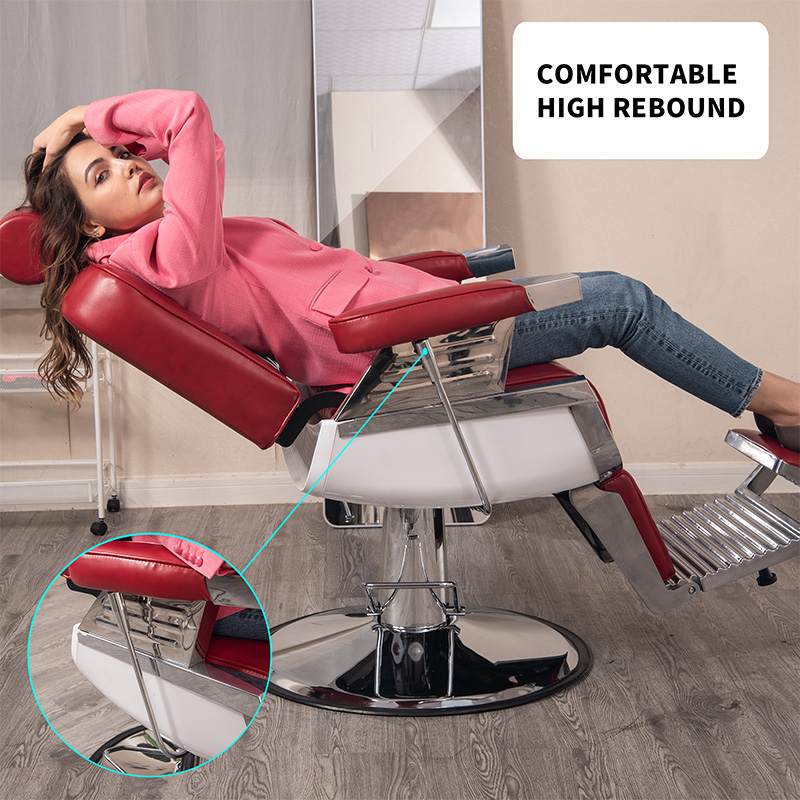
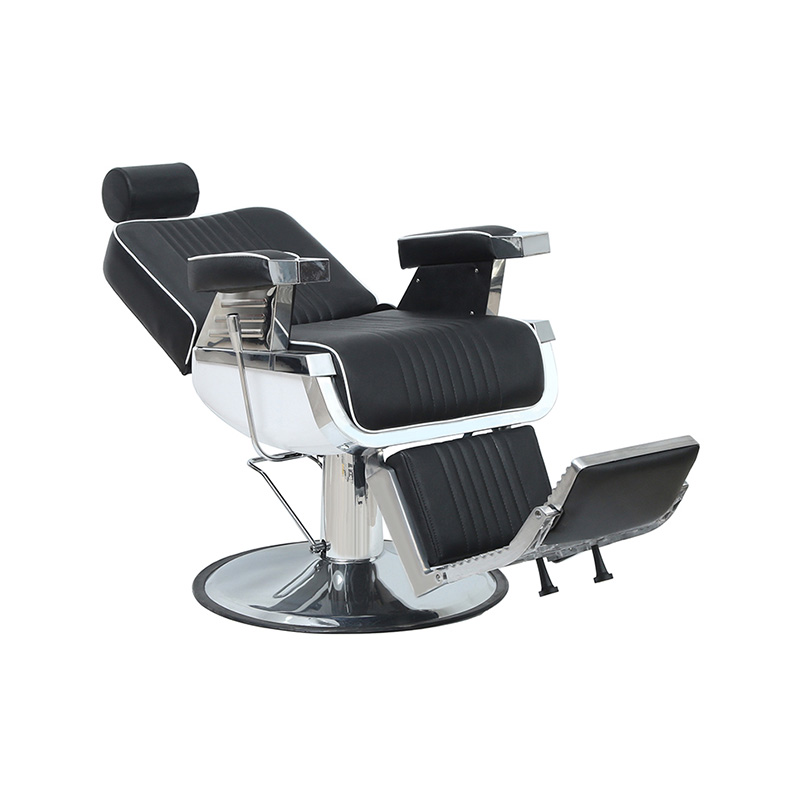
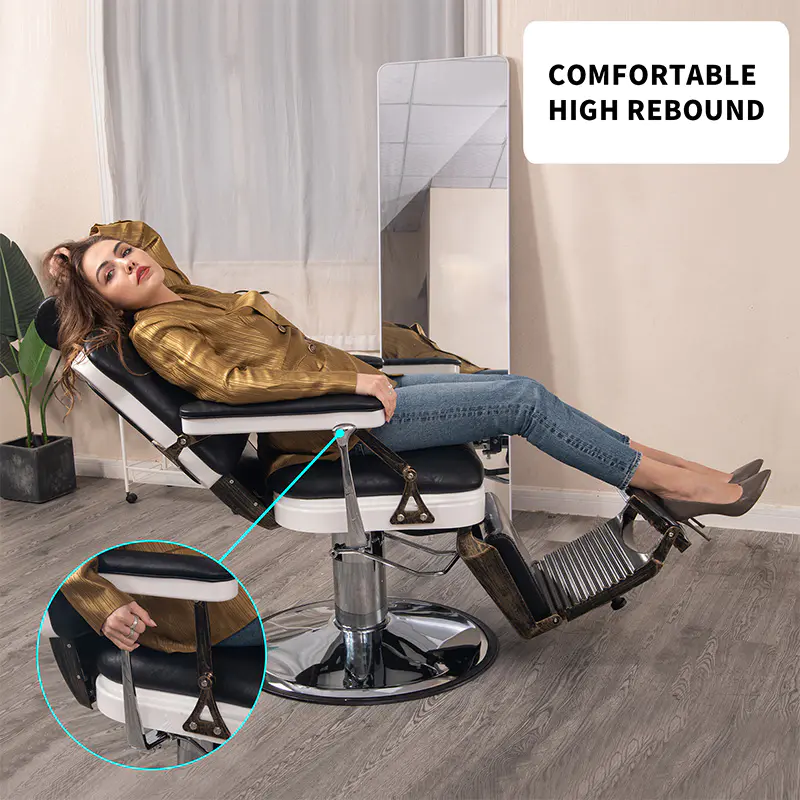
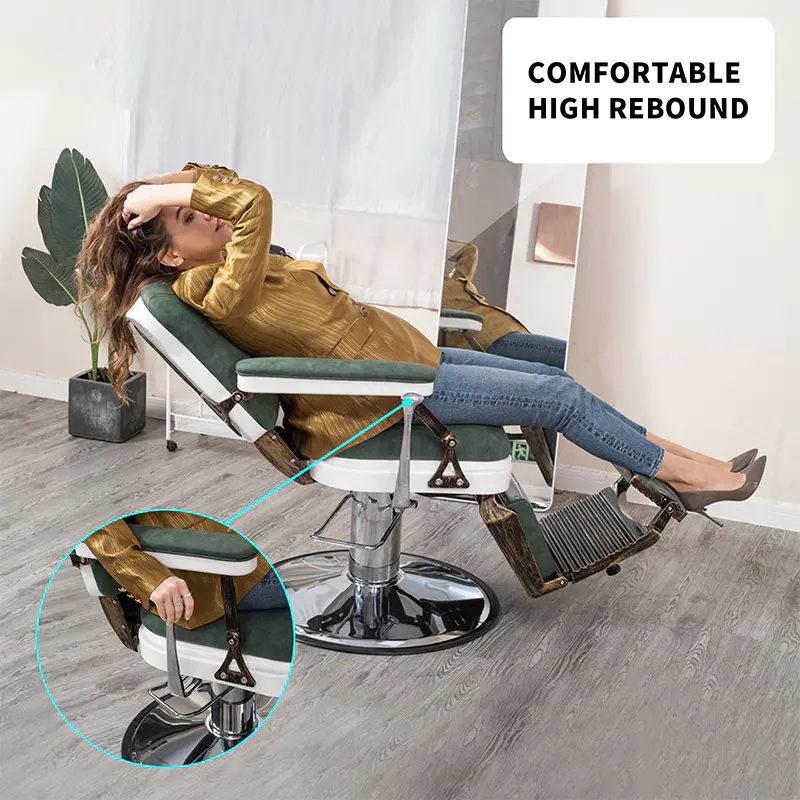
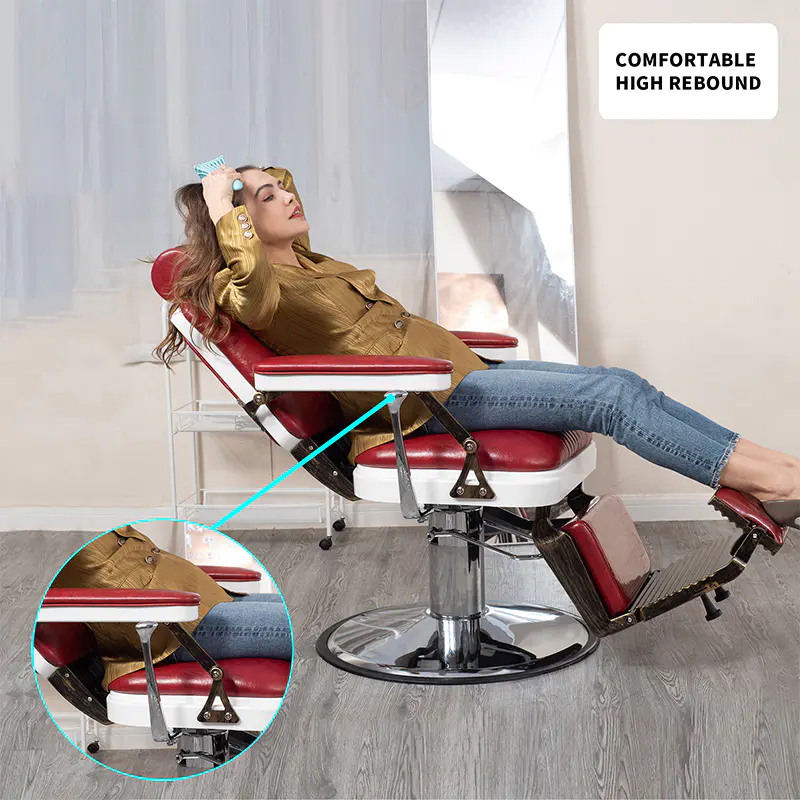
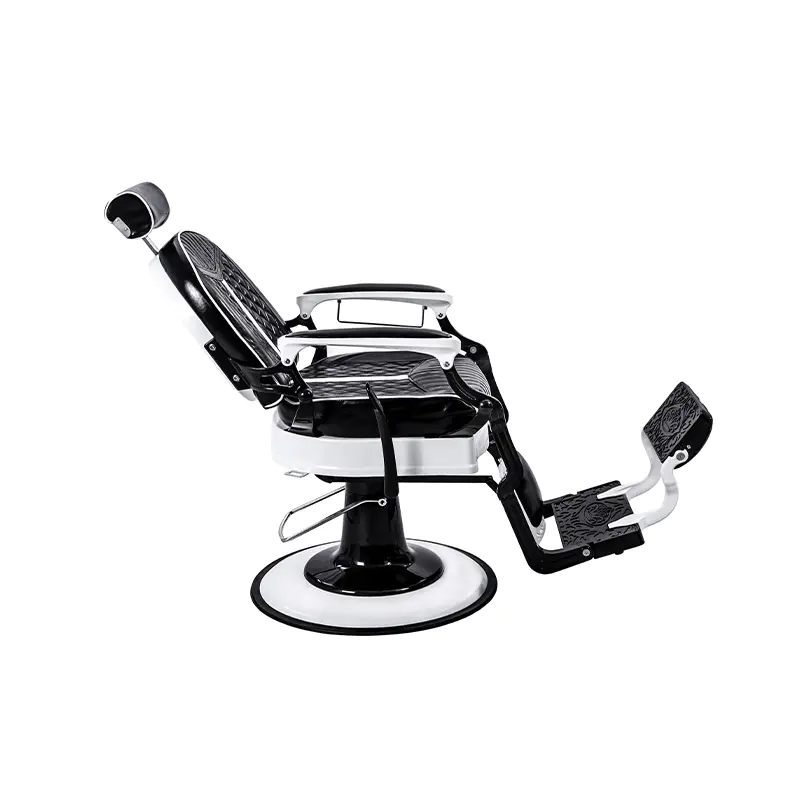
A client can spend a considerable amount of time in a single chair during a haircut, beard trim or straight razor shave, so comfort features are not a minor detail. A smooth, controlled recline mechanism matters most for shops that offer shaving or facial treatments, since the chair needs to hold a stable reclined position without drifting. High density foam padding that resists compressing over time keeps the seat comfortable through thousands of sit cycles, and an adjustable headrest lets the barber position each client correctly regardless of their height.
- Smooth, adjustable recline for shaving and facial services
- High density foam that retains its shape under repeated use
- Adjustable or removable headrest for different client heights
- Synchronized footrest that moves naturally with the recline angle
- Armrests positioned to support natural arm posture during longer services
Base Stability and Swivel Design
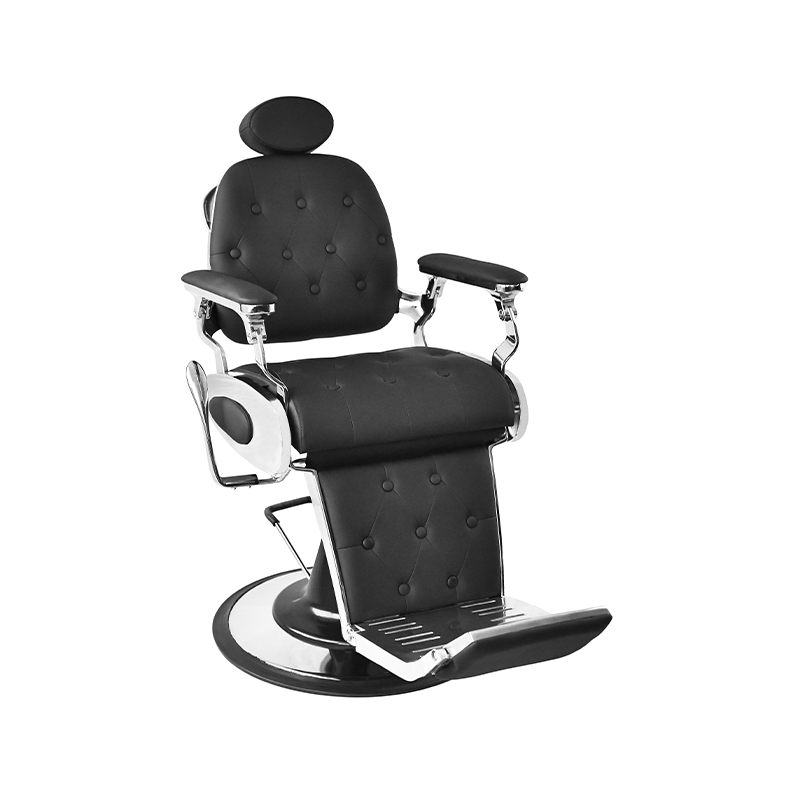
A round, weighted base generally provides the steadiest platform for detailed work such as fading or line work, since it distributes weight evenly and resists tipping in any direction. Chrome and matte black finishes are the two most common options, and both should be checked for consistent plating without visible seams or thin spots. Non slip pads or a stable footing underneath the base help keep the chair from creeping on smooth flooring during a full 360 degree swivel, which barbers rely on constantly to move around a client without repositioning their own stance.
Chair Dimensions and Height Adjustment Range
Physical dimensions matter as much as mechanical specifications, particularly when fitting new chairs into an existing station layout. Height adjustment on a typical hydraulic barber chair commonly spans roughly 930 to 1080 millimeters, which is about 36 to 42 inches, giving enough range to comfortably serve both seated adults and shorter clients without the barber needing to stoop.
| Dimension | Why It Matters |
|---|---|
| Seat Height Range | Determines ergonomic reach for different services |
| Base Diameter | Affects footprint within a station layout |
| Seat Width and Depth | Impacts comfort across different client sizes |
| Overall Recline Depth | Confirms clearance space behind the chair |
Common Settings Where Barber Chairs Are Used
Barber Chairs are used well beyond traditional barbershops, and the right configuration often depends on the setting.
- Traditional barbershops running continuous walk-in and appointment traffic
- Modern styling studios that combine haircuts with grooming services
- Barbering schools that need durable chairs for repeated student practice
- Mobile or home based grooming setups that still want commercial grade reliability
- Multi-chair salons sourcing several units at once for a consistent look
Barber Chair Versus Salon Chair: Key Differences
| Aspect | Barber Chair | Salon Chair |
|---|---|---|
| Height Adjustment | Hydraulic foot pump control | Often fixed or manual |
| Recline Function | Common, supports shaving services | Less common |
| Footrest | Integrated, synchronized ring | Often absent or fixed |
| Typical Build Weight | Heavier, commercial oriented | Lighter, styling focused |
Choosing a Reliable Barber Chair Manufacturer and Supplier
Specifications only tell part of the story. The long term value of any barber chair also depends on the manufacturing quality and support behind it. Before placing an order, ask a prospective barber chair manufacturer or barber chair supplier about typical production lead time, spare parts availability for the hydraulic pump, and whether upholstery and finish options can be customized for your shop. A dependable professional barber chair supplier should be able to walk through base options, upholstery grades and recline configurations rather than offering a single fixed model, and a commercial barber chair supplier sourcing for multi-location operations should be comfortable discussing consistent quality across larger production runs.
Ningbo HongZi Beauty and Hairdressing Equipment Co., Ltd. is a professional enterprise engaged in the research, development, manufacturing and export of barber chairs, beauty beds, shampoo chairs and related salon furniture. Located in the town of Sanqishi, Yuyao, Zhejiang Province, near the scenic Hangzhou Bay, the company covers an area of 22000 square meters and employs more than 120 staff, with an annual output value of 120 million RMB. As a professional China OEM salon barber chair factory and ODM barber chair manufacturer, the company provides customizable barber and beauty equipment solutions to clients worldwide, supported by specialized machinery such as laser plate cutters, pipe cutters, punching machines, CNC leather cutters and embroidery machines, along with automated production lines for welding, cotton pasting and assembly. A dedicated sofa workshop features a complete upholstery processing flow, enabling integrated manufacturing from structural components to surface leather so that buyers sourcing barber chair wholesale or barber chairs wholesale can expect consistent quality and unified detail across every unit produced.
Final Pre-Purchase Checklist Summary
| Checkpoint | Why It Matters |
|---|---|
| Hydraulic Pump Grade | Determines lifespan under daily use |
| Rated Weight Capacity | Should exceed your typical client range |
| Upholstery Material | Affects cleaning routine and appearance over time |
| Recline Mechanism | Important for shaving and facial services |
| Base and Footrest Build | Sets long term stability and comfort |
| Manufacturer Support | Determines uptime over the chair's lifespan |
Frequently Asked Questions About Barber Chairs
What is a barber chair used for
A barber chair is used to seat and position clients during haircuts, beard trims and shaving services, with hydraulic height adjustment and swivel for barber convenience.
What is the difference between a barber chair and a salon chair
A barber chair typically includes hydraulic height control, recline function and an integrated footrest, while a salon chair often has fixed or manual height with fewer of these features.
What makes a good barber chair
A good barber chair combines a reliable hydraulic pump, adequate weight capacity, durable upholstery, a stable base and a smooth recline mechanism for a range of services.
How long do barber chairs last
With reasonable care, a standard commercial chair often lasts five to eight years, while heavy duty models with stronger pumps and seals can serve well beyond ten years.
Are hydraulic barber chairs better
Hydraulic chairs allow smooth, precise height adjustment for each client and service, which is why they are the standard choice for busy commercial barbershops.
What is the best barber chair for a barbershop
A chair with a heavy duty hydraulic pump, a weight capacity suited to your client base, durable upholstery and a stable base generally performs best in a busy shop.
How does a hydraulic barber chair work
Pressing the foot pedal forces hydraulic oil from a small piston into a larger cylinder, lifting the seat, while a release lever allows the seat to lower smoothly.
How do you fix a barber chair that keeps sinking
Gradual sinking usually points to worn internal seals or low hydraulic fluid, and refilling the fluid or replacing the pump assembly typically resolves the issue.
Why won't my barber chair go up
This is often caused by a fluid leak, a failed piston, or a mismatched replacement pump, so checking fluid level and pump compatibility is the first step.
What should I check before buying wholesale barber chairs
Confirm the hydraulic pump grade, upholstery material, production lead time and after sales support offered by the manufacturer before committing to a bulk order.